Minimum Order Quantities Explained for Small Brands
What a minimum order quantity is, why factories set MOQs, the real cash risk of a big first order, how to lower an MOQ, and a way to skip it entirely.
You found a factory. The samples look great. Then the quote lands with a number attached that stops you cold. Five thousand units. Maybe more. That number is the minimum order quantity, and for a lot of founders and creators it is the exact moment a real product brand starts to feel impossible.
A minimum order quantity, or MOQ, is the smallest batch a factory will produce in a single run. It is not a scam and it is not the factory being difficult. It is math that can quietly wreck a small brand if you walk into it without a plan, because the size of that first order decides how much of your own money you bet on an unproven product.
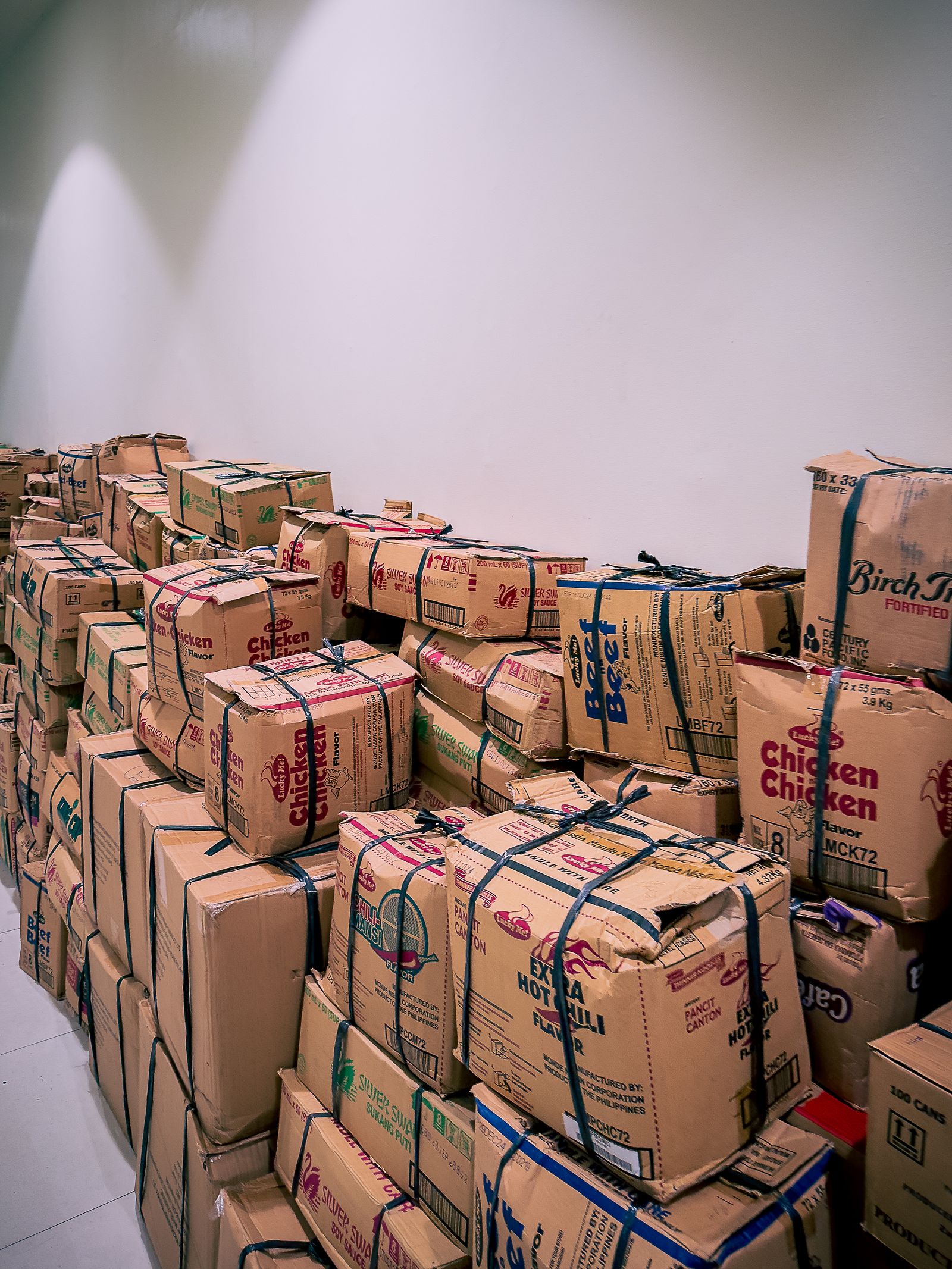
Inventory a big first order leaves you holding before you have sold a single unit
What is MOQ and why every factory has one
Before a factory makes your first piece, machines get calibrated, screens or molds get built, raw materials get ordered from suppliers with their own minimums, and a slot on the production line gets blocked off. All of that happens whether you order 200 units or 5,000. As Cosmo Sourcing puts it, a 200 unit run costs a factory almost as much to set up as a 5,000 unit run but brings in a fraction of the revenue. So the factory sets a floor that lets it cover the fixed cost of firing up production and still make a profit.
Raw materials pile onto this. A fabric mill might not sell less than 1,000 meters of a given cloth, so your order has to be big enough to use it or you pay a steep premium per yard. Factories sit on top of component suppliers and subcontractors who all carry minimums of their own, and those numbers roll downhill to you. None of it is personal. It is the cost structure of making physical things.
Typical MOQ ranges by product type
There is no single number, and anyone who quotes you one is guessing. MOQs swing from about 100 units to well over 10,000 depending on what you make and where. A few rough ranges from 2026 sourcing guides give you the shape of it.
- Apparel from large Chinese garment factories usually runs 500 to 5,000 pieces per style and per color. Vietnam tends to sit lower, closer to 300 to 3,000.
- Supplements often start at 500 to 1,500 units, with capsules and powders on the low end and gummies higher.
- Consumer electronics and PCB assembly commonly land at 500 to 5,000 units.
- Stock cosmetic bottles and jars frequently carry minimums of 500 to 1,000 pieces.
The more custom tooling a product needs, the higher the floor. A custom molded part with expensive setup pushes the MOQ up. An off the shelf item the factory can resell to other buyers stays low. If you want a fuller walkthrough of the sourcing side, we cover it in how to find a clothing manufacturer.
The real problem is not the MOQ, it is the cash
Say the MOQ is 1,000 units and your landed cost is 20 dollars each. That is a 20,000 dollar check written before a single customer has proven they want the thing. The danger is not the order. It is what happens if it does not sell. NetSuite estimates that carrying inventory costs about 20 to 30 percent of its value every year in storage, handling, and financing. Overstock ties up a big slice of your working capital in boxes, money you cannot spend on ads or your next product.
Picture the version where demand comes in soft. Half the run does not move. You pay to store it, watch it age, and eventually mark it down or write it off. The lowest price per unit felt like a win at the quote stage and turns into the most expensive mistake on your books. Pricing this correctly matters just as much, which is why we walk through the margin side in how to price a product you manufacture.
How to lower an MOQ
A listed MOQ is often a starting point, not a wall. Factories set it to hit a revenue threshold, so you have room to move if you help them hit it another way. Shopify notes that because MOQs are really about revenue, a higher price per piece can sometimes get you to the same number with fewer units. Simplify what you are asking for, since one style in one color is far easier to approve than a full collection. Put money on the table, because a larger deposit lowers the factory's risk. Show you are a real partner with fast sample feedback and a clear plan for a follow up order.
You can also fish in a different pond. Smaller factories in Portugal, Turkey, and parts of Southeast Asia, along with some domestic manufacturers, advertise lower minimums to win newer brands. The trade off is usually a higher price per unit, which loops you back to the cash math above.
The version where you skip the gamble
Every tactic above still leaves you fronting an order and carrying the risk. There is another way to run this. The No Logo model removes the upfront inventory commitment. Instead of writing a five figure check to a factory and praying the run sells, No Logo manufactures through a vetted factory network and handles fulfillment, so you are not betting your savings on a first batch. The economics are a transparent 25 percent production margin with no hidden fees. You set the retail price and keep control of the brand. What you do not do is bury 20,000 dollars in boxes before you know the product works.
Oskar Flodstrom, who runs the brand erik oskr, is a real example. He submitted a sample of a pill bottle shaped side table, No Logo manufactured it with no capital and no minimums from him, and his store did 50,000 dollars on day one. He never had to gamble on a garage full of inventory to find out if people wanted it. You can read the full Oskar case study for how that played out.
MOQs are real, and for most of manufacturing they are unavoidable. The mistake is treating a huge first order as the price of entry. It is one of several paths, and it happens to be the one with your money most exposed. Test the demand before you fund the warehouse. When you are ready, start a project and see a real sample before a dollar of inventory is on the line.