Reshoring vs Overseas Manufacturing for a D2C Brand
A 2026 guide to reshoring vs overseas manufacturing for D2C brands covering cost, lead time, minimums, tariffs, quality, and the made in country story.
You already sell something. The unit economics used to make sense, and then a year of tariff headlines, a stalled container, and a quality miss had you opening a spreadsheet at midnight. Now you are stuck on the question every operator is asking. Reshoring vs overseas manufacturing, which one actually protects your margin in 2026. The honest answer is that it depends on the product, and the sharpest brands are not picking one flag for the whole catalog.
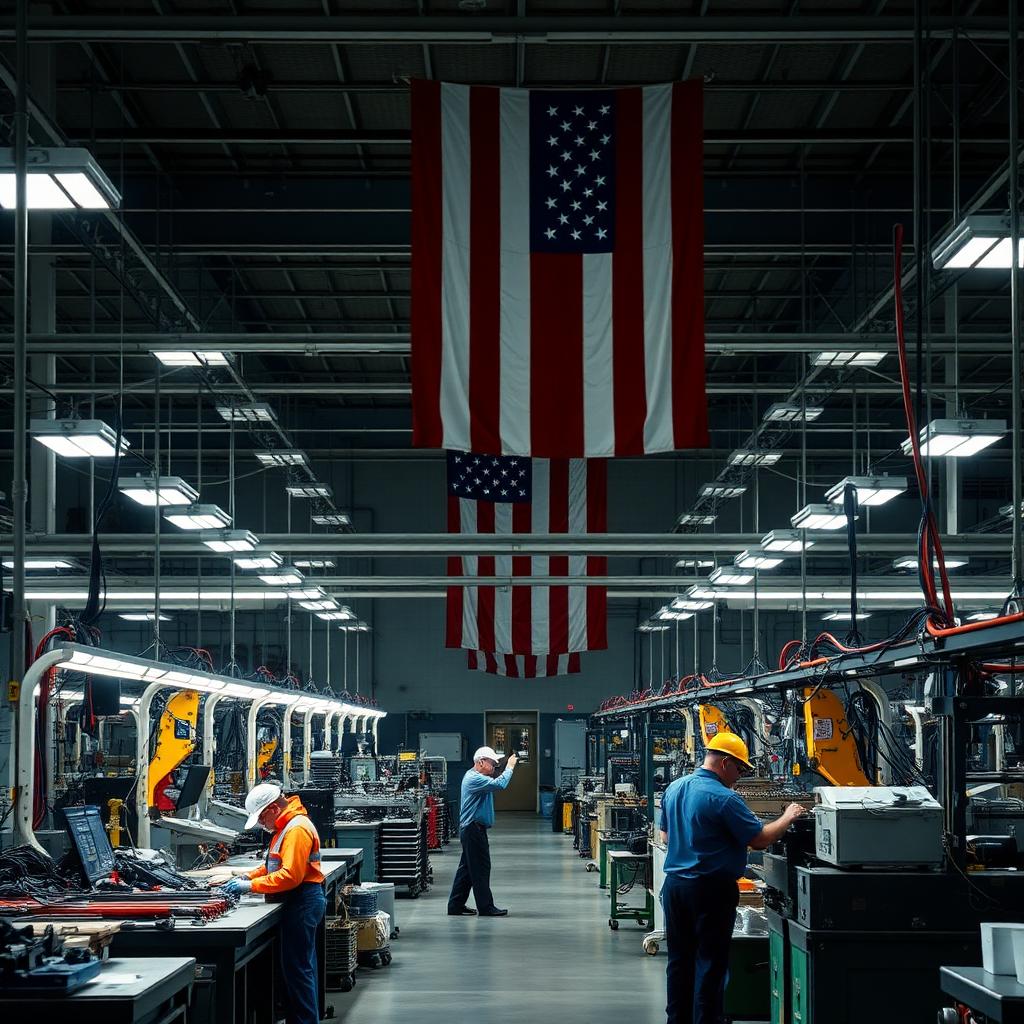
A production floor is where the margin math actually gets decided
The 2026 backdrop that changed the math
The policy ground shifted hard this year. On February 20, 2026 the Supreme Court struck down the IEEPA tariffs in a 6 to 3 decision, ruling the president lacked authority to impose them under that law. Within days the administration pivoted to a Section 122 global surcharge, first at 10 percent and then raised to the statutory maximum of 15 percent. Section 122 carries a 15 percent cap and a 150 day limit, and the Court of International Trade already ruled against the proclamation in May, so the surcharge itself is contested and short lived by design.
Underneath all of that, the Section 301 tariffs on Chinese goods did not go anywhere. Apparel, footwear, and many consumer goods on List 4A sit at 7.5 percent, while a large block of other categories carry 25 percent. The takeaway is not a single number. It is that landed cost from China now moves with headlines, and you have to model a range rather than a fixed rate. For the full picture, see how 2026 tariffs are hitting D2C brands. None of this is a reason to get creative with customs. The play is smart, legal sourcing, covered in how to reduce tariff and duty costs.
Cost, honestly
For a lot of categories, overseas still wins on the sticker. Rising wages in China have narrowed the old gap, and a highly automated US plant can match some overseas unit economics, but "can match" is doing heavy lifting in that sentence. For labor heavy goods like cut and sew apparel and anything with a lot of hand assembly, a well run overseas factory still lands cheaper even after the current surcharge, because the labor spread is that wide. Where domestic gets closer is total cost, not unit cost. When you add freight, duty exposure, the cash tied up in a 90 day pipeline, and the cost of a bad batch you cannot inspect in person, the two numbers move toward each other. That is the honest case for reshoring.
Lead time and minimums, where domestic earns its keep
This is the column overseas cannot easily win. Domestic apparel production commonly runs from a few weeks to a couple of months, while overseas orders often need roughly 90 to 120 days from confirmed order to landed goods once materials, production, and ocean freight stack up. Minimums move the same way. US cut and sew and small batch shops often start at 50 to 100 units per style, while larger overseas mills frequently want 300 to 500 or more. Treat these as general industry ranges. If you are testing a drop, chasing a viral moment, or protecting cash, a lower minimum and a faster turn is worth real money even at a higher unit price.
| Factor | Overseas | Domestic |
|---|---|---|
| Unit cost on labor heavy goods | Usually lower | Usually higher |
| Lead time | Roughly 90 to 120 days | A few weeks to a couple of months |
| Typical minimums | Often 300 to 500 or more | Often 50 to 100 |
| Tariff exposure | Higher and moving | Low to none on the US sale |
| Made in country story | No | Yes |
Quality and the made in country story
Overseas factories are not lower quality by default. The real difference is control. When the factory is thousands of miles and twelve time zones away, a defect costs you a full production and shipping cycle to catch and fix. Domestic shortens that loop, so problems get caught in days. That feedback speed is often the real reason brands move.
A made in country claim is also a brand asset. Gallup has long found most Americans say they will pay more for American made goods, and The Vision Council reported that more than half of US consumers value a Made in USA label. The honest caveat is that stated preference and actual checkout behavior are not the same, and shoppers have gotten skeptical of hollow claims. The premium shows up when the product, the story, and the proof line up, and it evaporates when the label feels like a sticker. Price that lift into your model, do not assume it.
Should I reshore, a simple way to decide
You do not answer this for your whole brand at once. You answer it per product. Reshore the ones where speed, low minimums, and the story pay for the higher unit cost, a hero product you restock constantly, a limited drop, or a line where made in country is central to the promise. Keep overseas the labor heavy, price sensitive, deep catalog items where a wide labor gap still wins even after tariffs. Most brands land in the middle, some SKUs home, some abroad, and a plan to move faster than competitors when the rules change again. Spreading production instead of betting everything on one country is covered in china plus one sourcing explained.
The honest case for No Logo here
The reason brands go all in on one region is not conviction. It is that finding and vetting a second factory is brutal, so they stay put and hope. One brand spent a full year trying to find the right factory for a pants project, burning through samples and dead ends. A partner who already had the relationships then produced that founder's next product, a hoodie, in about two weeks.
No Logo is built for this decision. There is direct factory access at a flat 25 percent production margin, which lowers your landed cost instead of hiding a markup. There is on the ground presence in China plus a broader vetted network, so you can add a backup source or move a product without starting the year long search yourself. And there is no MOQ lock in, which frees the cash a big overseas order ties up. Oskar Flodstrom used the same engine. He submitted a sample, launched his side table brand erik oskr, and did 150,000 dollars in two weeks, told in full in Oskar's story.
The point is not that home always wins or that overseas always wins. The brands that come out of 2026 ahead are the ones who can choose per product and change their mind quickly. Start a project with no obligation and see what a real quote and timeline look like before you commit.