How Much Does It Cost to Manufacture a Product in 2026
How much it costs to manufacture a product, broken down from unit cost and tooling to samples, freight, and duties, so you can budget before you commit.
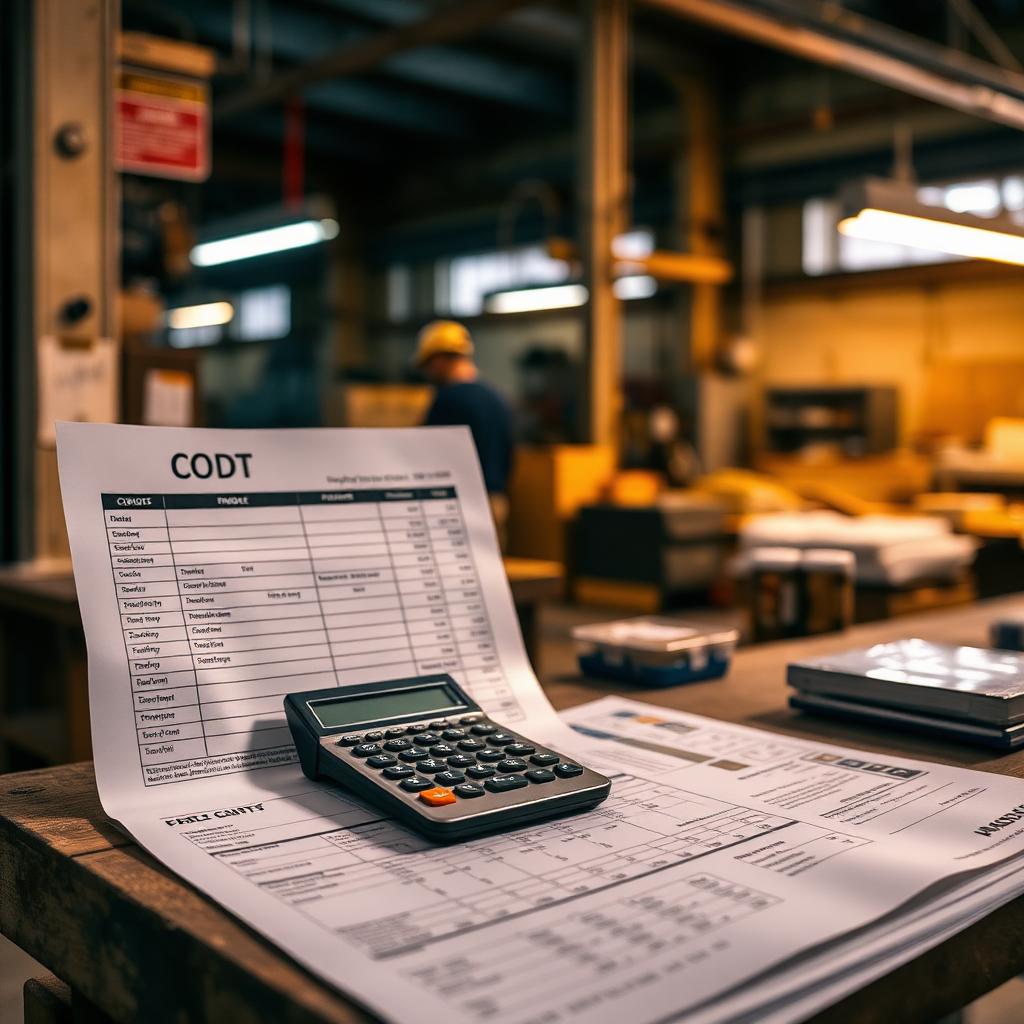
Ask a factory how much it costs to manufacture a product and you get a single number back. That number is almost always wrong. Not because the factory lied, but because the price they quote is one line in a stack of costs, and the stack is where founders get surprised. The finished, landed, sitting in your warehouse cost is often 40 percent or more above the quote. So let's take it apart so you can budget before you commit a dollar.
The manufacturing cost breakdown that actually matters
A product's cost splits into a few buckets. Materials, labor, and factory overhead make up the price of the unit itself. On top of that sit the one time costs, tooling and samples, and the costs of getting the product to you, freight and duties. Miss any of these and your budget is fiction.
Inside the unit price, materials usually do the heavy lifting, often 40 to 60 percent of what it costs to make a physical good, with labor and overhead splitting the rest. Swap a standard fabric for organic cotton, or basic acrylic for cast acrylic, and you are moving the biggest lever there is. Labor is next, and it is where country of origin shows up, since the same product made in China, Vietnam, or the United States carries wildly different rates. Overhead covers the factory keeping the lights on and quality control staff on the floor, baked into the per unit price you get quoted.
Tooling and sample costs, the money you spend before unit one
Before a factory makes a single sellable unit, you often pay for tooling and samples, separate from the per unit price entirely. Tooling is the mold, die, or cutting setup built for your product, and injection molding is the clearest example. According to RapidDirect, a mold can run from roughly 2,000 dollars for a simple prototype tool to 50,000 dollars or more for a hardened production mold, and adding a single moving slider can inflate that cost by 15 to 30 percent. Formlabs frames it the same way, the real cost of an injection molded part is the tooling paid once, plus the piece price paid on every unit after.
Samples come first, and you pay for them too. A sample lets you hold the product, test it, and request changes before mass production. You will usually go through more than one round, and it is worth it, because catching a flaw in a 200 dollar sample is far cheaper than in a 5,000 unit run. We cover that stage in getting a real sample made without losing money.
Why unit cost drops hard with volume
Tooling is a fixed cost. You pay for the mold once whether you make 500 units or 50,000, so the more units you spread it across, the smaller its share of each one becomes. A part that costs 1 to 5 dollars to produce at a run of 10,000 units can drop under 1 dollar per piece once you are making 100,000 or more.
Take a simple example. A 5,000 unit run with an 8,000 dollar mold and a 1.50 dollar per part cost comes out to 15,500 dollars, or 3.10 dollars per unit all in. Cut the order to 500 units and the mold alone is 16 dollars a unit before you add the part cost. Same product, same factory, the per unit number more than quadruples. This is exactly why huge minimum order quantities exist and why they are so painful for a founder testing an idea. There is more in MOQs and how to avoid huge upfront orders.
The costs that show up after the quote
The factory price gets your product to the factory door. Getting it to you is a second bill. Ocean freight moves with the market. As of mid 2026, Freightos data puts a 40 foot container to the West Coast at roughly 1,850 to 2,400 dollars, with East Coast routes higher and peak season surcharges from August to October adding hundreds more. Air freight is faster and several times the price. Spread whatever you pay across your order and add it to every unit.
Then come duties, and 2026 has made these heavier. Per Gateway Lines, the Section 301 List 3 tariff adds 25 percent on a wide band of consumer goods and furniture and has been in effect since 2019. Layered on top are the newer 2026 surcharges and the base duty rate for your category. For apparel, the combined effective rate on China made garments can land in the 30 to 50 percent range depending on fiber. Add it up. Your factory quote, plus tooling per unit, plus freight per unit, plus duties and fees, is your true landed cost. That is the number you price against, and we walk the pricing side in how to price a product you manufacture.
How to estimate before you commit
You can get close without a purchase order. Define the product tightly, materials, size, finish, and any moving parts, because a vague spec gets a vague quote. Ask the factory to separate tooling and samples from the per unit price, and to quote that price at two or three volumes so you can see the curve. Then add freight and duties yourself using current rates for your category, and build the estimate at the volume you can actually afford, not the one that makes the unit cost look pretty.
Where the guesswork disappears
Everything above is the cost of doing this alone. Every hidden fee, every mold quote you cannot sanity check. That guesswork is the real price of manufacturing without a network, and a big part of why buying blind off a marketplace goes wrong, which we compare in No Logo versus Alibaba. No Logo is built to remove it. The model is a flat 25 percent production margin on top of the manufacturer cost, nothing hidden underneath. If a factory builds your product for 100 dollars, No Logo adds 25, your production cost is 125, and you set the retail price from there. No upfront inventory, no surprise line items, and a vetted factory network with people on the ground in China who already know the real tooling, freight, and duty numbers. Oskar Flodstrom submitted one sample, launched his brand erik oskr, kept full ownership, and did 50,000 dollars in sales on launch day. If you want a partner who shows every line of the cost, get in touch with the team.