Product Ideas for Podcasters and Streamers
Product ideas for podcasters and streamers who want more than ad money, and how loyal audio and streaming audiences become an owned brand with no inventory.
Someone puts your show on for three hours while they cook, commute, and fall asleep. That is a different kind of attention than a scroll. If you are hunting for product ideas for podcasters, or you are a streamer tired of living on subs, the hardest part is already done. Most creators in audio and live streaming still monetize through ads, subscriptions, and a rack of blank tees. There is a much bigger door standing open.
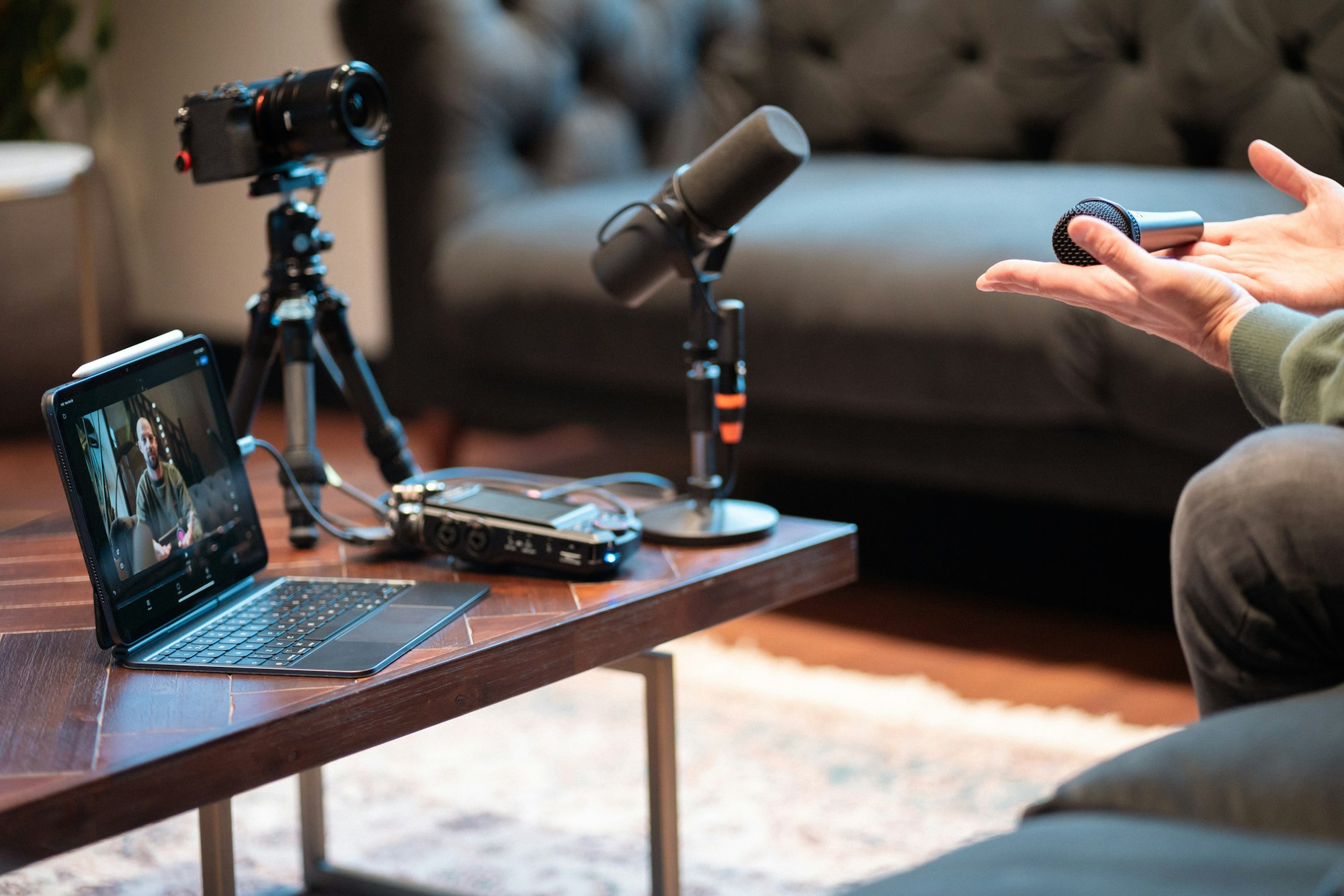
A recording setup like this reaches people who choose to listen for hours at a time
Your audience is loyal in a way social platforms are not
Podcast and streaming audiences pick you. They stay for a full episode or a full stream and come back on a schedule. That loyalty shows up in the money. Edison Research found that 21 percent of weekly podcast consumers financially supported a podcast in the past year, and of those, nearly half did it to support the host as a person rather than for any perk. Right now most of them have nothing to buy except a subscription tier and a shirt. When someone trusts you that much, they will pay for a real object that connects them to the show.
Why generic merch underdelivers
A print on demand tee with your podcast name on it is not a product. It is a bumper sticker you charge 30 dollars for. Most print on demand shirts leave a creator with 20 to 35 percent net after the base cost, platform fees, and shipping, and the buyer can feel it is a blank Gildan with a rushed logo, so they buy one out of goodwill and never wear it. A real product does the opposite. It is designed from the idea up, it is something people actually want on their desk, and it carries a story only your audience gets. If you are still choosing what to make, what product should you launch first gives you a way to decide.
Product ideas that actually fit
The trick is to make the object part of the show, not a souvenir of it. For a podcast, think about where people listen. A well made ceramic mug tied to a running bit. A desk mat or notebook for the productivity crowd. A candle or a coffee blend for a slow morning show. A card game or a zine that turns inside jokes into something people play with friends. For streamers, the desk is the canvas. Custom keycaps, a mousepad built for the game you play, a deck of cards, an apparel piece designed to read as clothing rather than a walking billboard. One merch drop case study documented by Honest showed a mid tier Twitch streamer pull in 44,000 dollars from a single release of around 200 buyers, selling pieces from a 60 dollar shirt up to a 300 dollar item. The audience was not huge. The offer was good, and it was theirs.
How to sell without a huge following
You do not need a million downloads, just a clear offer talked about in a way native to your format. Audio gives you the read. You already know how to sell in your own voice, because that is what a host read ad is, so turn that skill on your own product instead of a sponsor's mattress. Live streaming adds real time reaction. Reveal a sample on stream, read the chat, run a countdown, and let the drop become an event, with a limited first run creating urgency without a fake sale. For the full arc from idea to launch day, how to start a product brand as a creator walks through it.
Launching without holding inventory
Most creators freeze here, because designing a real product sounds like ordering 500 units, filling a closet, and eating the loss if a run flops. There is a cleaner path. You can design a genuine product, get a physical sample to show your audience, and only produce at scale once you know the demand is there.
No Logo handles that side so you keep doing the show. The team develops the product, sends you a sample to hold and film, manufactures it at scale, ships it, and handles customer support. The model is a flat 25 percent production margin with no upfront inventory, and you set your own retail price and keep the brand. Creators working this way often clear 30 to 50 percent profit per unit, against the 5 to 8 percent an affiliate link pays. That is the whole reason to own the product instead of renting your influence, which is what you don't own your audience until you own the product digs into.
The proof is real. Oskar Flodstrom, a furniture builder posting from a tiny workshop, submitted one sample of a pill bottle shaped side table, launched his brand erik oskr to a modest following, and did 50,000 dollars in revenue on his first day. You can read Oskar's story in full. He held zero inventory and risked nothing to find out. Pick one idea and see it made. Get in touch with the team.