How to Fix Quality Control Problems With Your Factory
Manufacturing quality control problems cost you refunds and bad reviews. Here is what causes factory defects and how to fix them before they reach customers.
A pallet lands at your warehouse. You cut the shrink wrap, pull the first unit, and something is off. The stitching wanders. The color reads a half shade darker than the sample you approved. A zipper sticks. Nothing is catastrophic on its own, but you know what comes next. One star reviews that name the exact flaw. A return rate that quietly eats your margin. Manufacturing quality control problems rarely announce themselves. They show up two or three orders in, after you have already told your customers the product is great.
This is one of the most expensive problems a physical brand can have, and one of the most fixable. Most recurring defects trace back to a small number of causes, and once you can name the cause, you can close it.
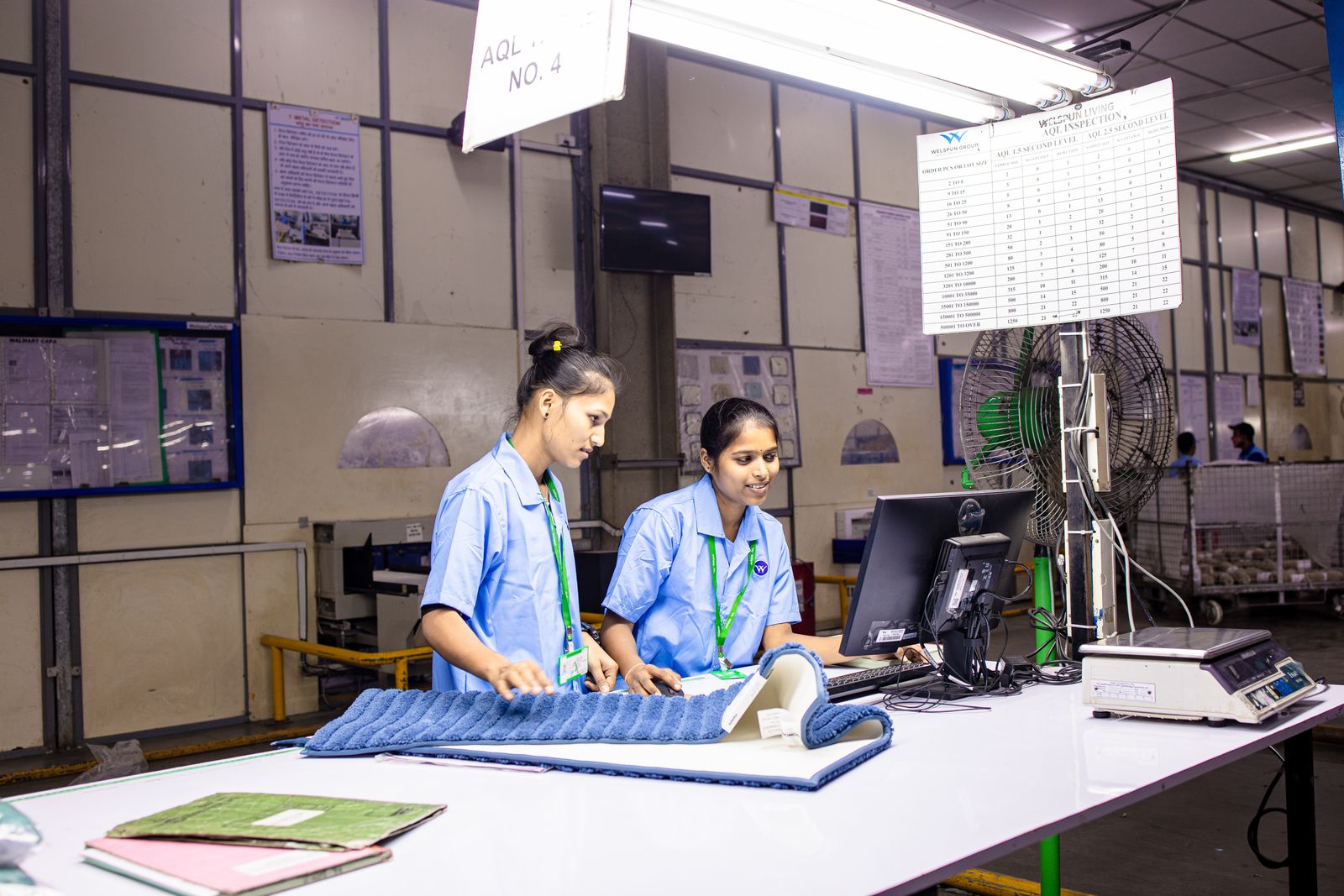
A pre shipment fabric check on the factory floor, where most defects should be caught before anything ships
What actually causes manufacturing quality control problems
Inconsistent quality feels random from your side of the ocean. It rarely is. Four causes account for most of it.
The first is a weak spec. If your factory is guessing at a tolerance, a material weight, or a Pantone code, it will guess differently on every run. What you read as a defect, the factory reads as a reasonable take on a vague instruction.
The second is no inspection. Plenty of brands pay for goods, wait for the boat, and open the boxes at their own warehouse. That is the single most common way defects reach customers, and by then you have paid in full.
The third is the wrong factory. Some factories are good at cut and sew and bad at hardware. Some took your order to fill a gap and will never care about it. A great spec cannot save a partner who lacks the capability or the interest.
The fourth is price pressure. Squeeze a unit price hard enough and quality quietly follows it down. The industry calls this quality fade. The first run is beautiful, the fifth run uses a cheaper thread and a thinner board, and nobody told you. Firms like Sofeast describe golden sample discipline as the main defense against exactly this slow slide.
None of these are bad luck. Each one has a fix.
Tighten your specs before you blame the factory
Before you fire anyone, look hard at what you handed them. A large share of factory defects are really specification defects wearing a costume.
The document that closes the gap is a tech pack. A real one leaves nothing to interpretation. Exact dimensions with tolerances, material composition and weight, Pantone color codes instead of the word blue, a bill of materials that names every component, plus stitch counts, packaging, and how the finished unit gets tested. But paper alone never fully captures hand feel, color accuracy, or how a seam actually behaves.
That is what a physical benchmark is for. The approved pre production sample, often called the golden sample, becomes the standard every future run is measured against. You get a sample made, approve it in your hands, and from then on the factory is matching an object you both signed off on rather than chasing your opinion. When something drifts, you catch it against a fixed reference instead of a fuzzy memory.
Inspections and AQL in plain terms
Here is the part most founders skip, and the one that pays for itself fastest. You do not check quality by opening boxes at home. You check it at the factory, before the goods ship, using a sampling standard.
That standard is AQL, short for acceptance quality limit, defined in ISO 2859-1. An inspector pulls a statistically chosen sample from the batch, sorts the flaws into three buckets, and compares the count against agreed limits. The buckets are critical, major, and minor. Critical defects fail safety or regulation. Major defects make the product hard to sell or use. Minor defects are small cosmetic misses.
For North American and European markets, inspection firms like QIMA and Eurofins cite common tolerances of zero critical, 2.5 major, and 4.0 minor. You set the numbers with your factory in advance, so acceptance is not an argument. It is arithmetic.
Timing matters as much as the standard. A during production check, run when the first ten to twenty percent of units are done, catches a systemic mistake while there is still time to fix it. A pre shipment inspection, run when the order is mostly boxed, is your last gate before you pay freight on a bad batch. Skip both and you are inspecting at your own dock, the most expensive place on earth to find a defect. Quality Digest estimates the cost of poor quality runs 5 to 30 percent of sales, and every return costs you the product, the shipping both ways, and the review.
When the factory itself is the problem
Sometimes you do everything right and the defects keep coming. The spec is airtight, you are running AQL inspections, the unit price is fair, and the factory still cannot hold a standard.
That is the moment to admit you are with the wrong partner. A factory that was fine at a thousand units falls apart at ten thousand. A shop that nailed your first product has no real capability in your second. No amount of inspection turns a factory into something it is not built to be. At that point the fix is not another corrective action plan. It is a better manufacturer.
Finding that better manufacturer is where most founders lose months. One brand we worked with spent an entire year trying to source a factory for a pants project on its own. Because there was already a vetted network and people on the ground in China, that same founder's next product, a hoodie, got sourced and produced in about two weeks.
How a vetted partner bakes in quality control
The spec discipline, the golden sample, the AQL inspections at the right stages, all of it is work a good manufacturing setup does for you instead of leaving it on your desk. That is the case for building through a vetted network rather than managing a lone factory from thousands of miles away.
When No Logo produces for a brand, the quality steps are not add ons you have to remember to buy. The factories are already vetted, and sampling and QC are part of how the product gets made, not a separate vendor you coordinate across a twelve hour time difference. The model stays transparent, a 25 percent production margin with no hidden fees and no minimum order quantity locking your cash into a run you have not proven yet. You keep the brand and set the pricing.
It is the same network that took a roadside acrylic prototype and turned it into a clean, repeatable product for creator Oskar Flodstrom, whose brand erik oskr did real revenue within days of launch. If you are weighing that move, read what to look for in a manufacturing partner before you commit to anyone.
Quality problems are not a tax you have to keep paying. Fix the spec, inspect before you ship, and be honest about whether your factory can hold the line. If it cannot, start a project with No Logo and put a vetted network on it instead.