How to Scale Your Supply Chain as You Grow
Learn how to scale your supply chain as demand grows, the stages of scaling production and fulfillment, where brands hit walls, and how to plan capacity early.
The setup that got you to a million dollars is often the same one that starts breaking at two. You did everything right, the product sells, orders keep climbing, and then the machine that made it possible starts to groan. Learning how to scale your supply chain is less about buying bigger equipment and more about seeing the walls before you hit them, because you will hit them in a predictable order.
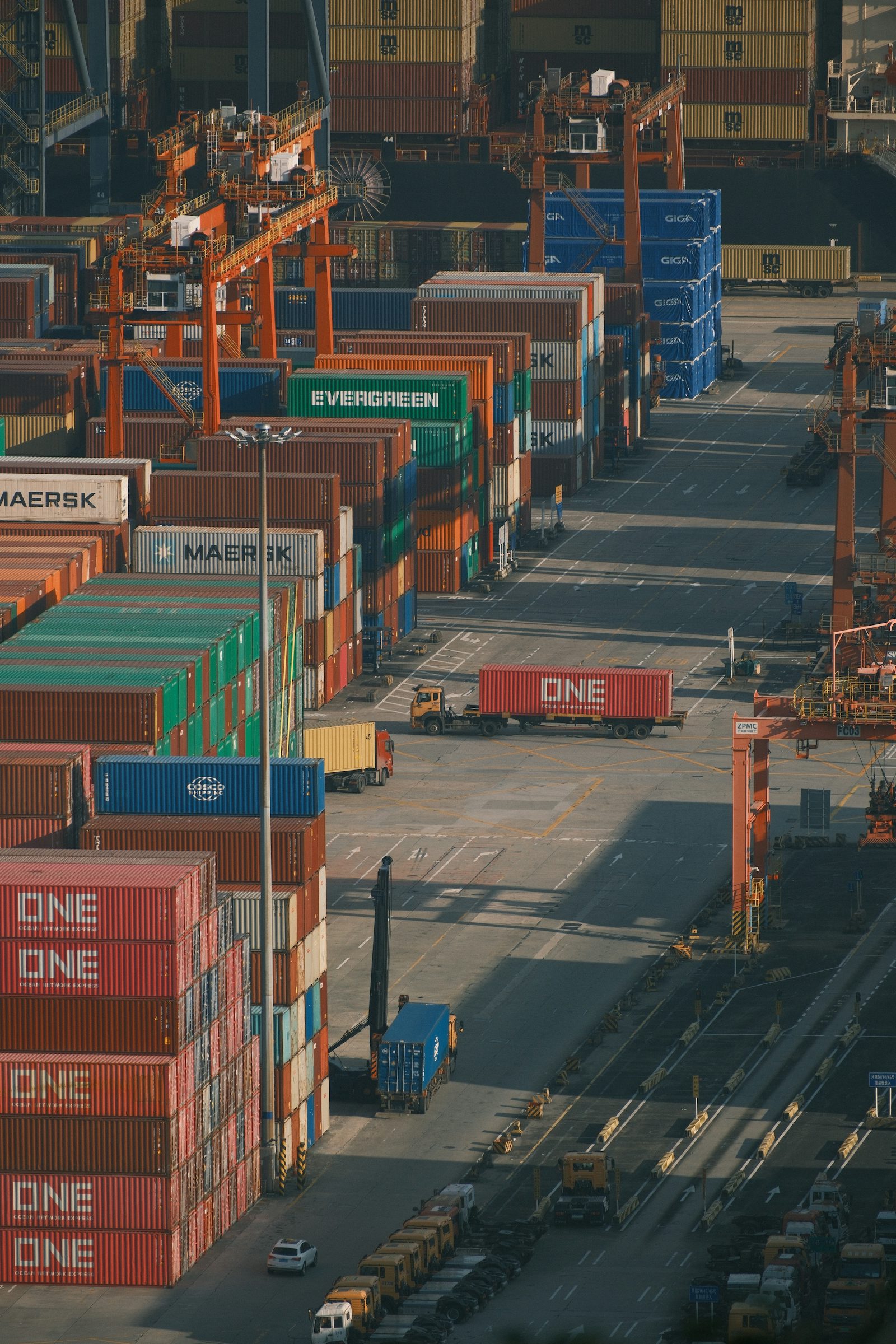
Shipping containers at a port, where a growing brand's volume becomes real
Growth breaks the setup that got you here
Your first factory said yes to a 300 unit run because you were small and easy and they had a slow week. That relationship worked because your order fit inside their spare capacity. The moment you need 3,000 units a month, on a schedule you can build a marketing calendar around, you are asking a different question, and a lot of small factories quietly cannot answer it.
U.S. Continental Packaging, a contract manufacturer, puts it plainly. If your manufacturer cannot consistently deliver your full order on time, that is a capacity problem, and at some point your manufacturer's ceiling becomes your sales ceiling. The factory that felt like a partner at low volume can become the thing capping your revenue at high volume, and the warning tends to be a late shipment during your best month. The same is true downstream, where packing orders from a garage cracks right when a promotion or a viral post lands.
The stages of scaling production and fulfillment
Scaling happens in rough tiers, and knowing which one you are entering tells you what to fix next. On fulfillment, GoBolt lays out a useful map in its 2026 DTC guide. Packing in house tends to hold up until somewhere around one to three million dollars in revenue. Between three and five million most brands need a real third party logistics setup. Above roughly eight to ten million, you are usually splitting inventory across more than one location so orders ship from closer to the customer. Each jump is a different operation, not a bigger version of the last one.
Production scales on a parallel track. Early on you fight to meet minimums. Later you negotiate them down and use volume as leverage. Moving a run from 300 to 500 pieces often cuts unit cost by a meaningful margin, and 500 to 1,000 takes off more. More volume can mean lower landed cost, if your factory can produce it and you are not drowning in cash tied up in stock you cannot sell yet.
Where brands hit the wall
A handful of breakpoints hit almost every growing brand. The capacity wall, where your factory maxes out and orders that took four weeks take seven. The cash wall, where bigger runs mean bigger checks written months before the money comes back. This is why inventory management for a growing brand stops being a spreadsheet chore and becomes a survival skill.
The demand spike looks like a win but is brutal. Locus, whose survey was reported by Supply Chain 24/7, found that 71 percent of shoppers say viral trends drive retail demand surges. A single video can take you from 50 orders a day to 500, and when the shelf goes empty the next batch can be four to six weeks out. If a spike is the risk you are staring at, we go deeper in how to scale production after going viral. And the single supplier wall, where one factory and one point of failure means a tariff change or a shutdown exposes the whole business.
Plan capacity ahead of demand, not behind it
The core discipline is simple to say and hard to do. You buy capacity before you need it, not after. GoBolt suggests planning for a 30 to 40 percent buffer above baseline for seasonal peaks, since a big share of annual revenue for many brands lands in the fourth quarter. Ask whether your current fulfillment setup can carry 24 to 36 months of projected growth, because moving warehouses mid climb is expensive and slow. Have the conversation with a second factory before your first one fails, not during.
Forecasting is the other half, and chasing perfect is a trap. Get accuracy strong on your top sellers by revenue, and accept that new products are a guess. Safety stock on your winners buys the weeks you need to reorder when demand runs hot. If your current manufacturer cannot come with you, moving without dropping orders takes planning, which is the whole topic of how to switch manufacturers.
How a scalable partner removes the ceiling
Everything above is real work, and plenty of brands do it well on their own. The reason to consider a partner is that it collapses most of that work into a network someone else already spent years building.
No Logo has an on the ground presence in China and an established, vetted factory network, so capacity is not something you scramble to find during your best month. One brand came to us after spending a full year trying to find the right factory for a pants project. Because the network already existed, we sourced and produced that founder's next product, a hoodie, in about two weeks. On the fulfillment side, global warehousing, pick and pack, shipping, and returns are handled, so the crack that shows up around three to five million dollars never becomes your problem to solve at 2 a.m. The model stays a flat 25 percent production margin with no upfront inventory lock in and no minimums forcing you to gamble cash on stock. You keep the brand and set the pricing.
This is what let creators like Oskar Flodstrom, the maker behind the brand erik oskr, go from a viral video to real orders without owning a factory. He submitted a sample, it got made inside the network, and he launched with no capital at risk. Scaling well is mostly about refusing to let operations decide how big you get. Plan capacity early, name the walls before you reach them, and make sure the people who make your product can grow at the speed your audience does. If you want to talk through where your supply chain is straining, start a project.