How to Start a Jewelry Brand in 2026
Learn how to start a jewelry brand, covering materials and price tiers, custom design, sampling, MOQs, margins, and launching to an audience that trusts you.
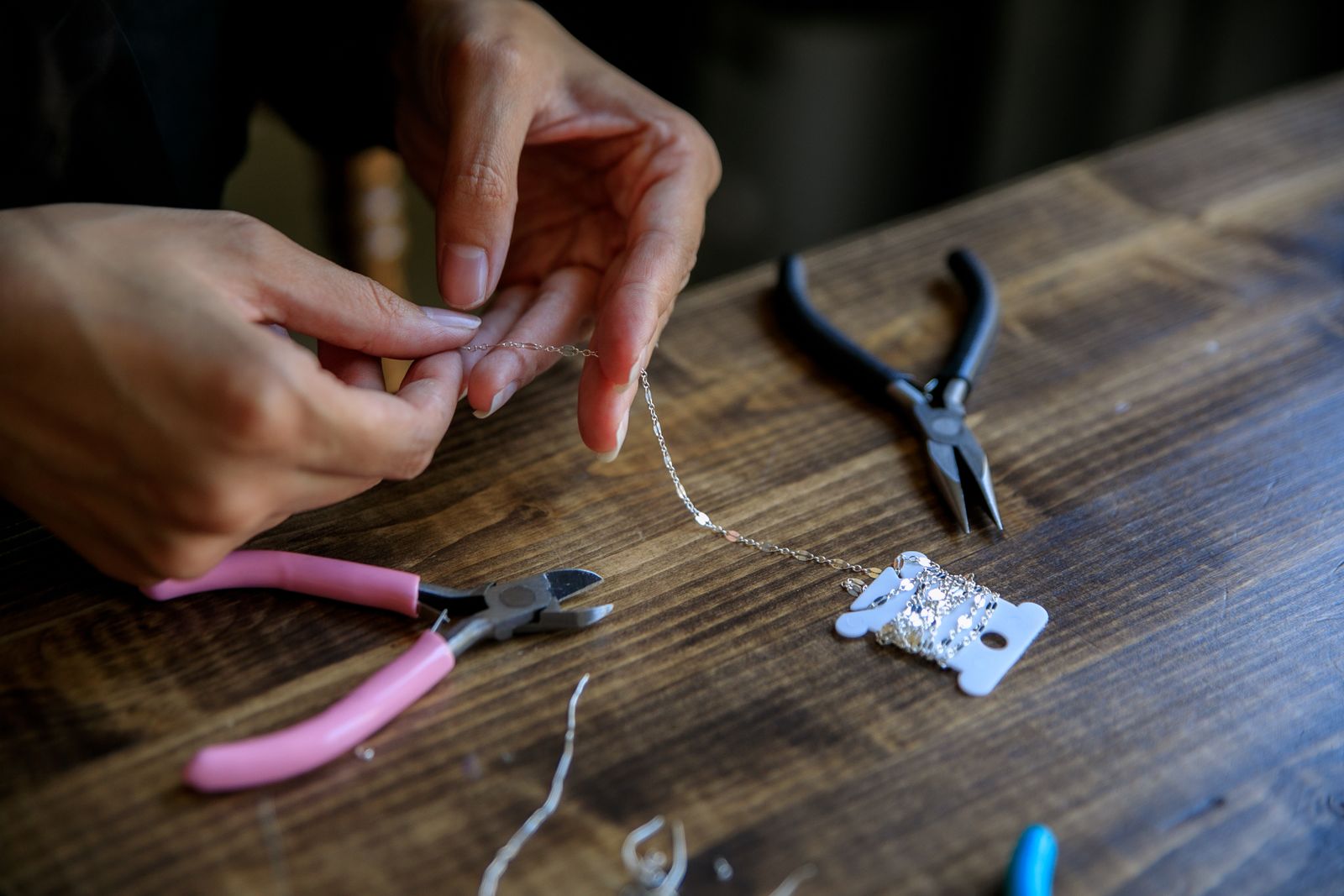
A pair of gold plated hoops costs a few dollars in raw material and sells for fifty. That gap is why jewelry is one of the best margin products a creator can make, and it is the whole reason to learn how to start a jewelry brand instead of just posting outfit videos. The math is friendly. The hard part is everything around it. Materials, sampling, minimums, and finding a point of view that does not look like every other store selling the same stainless steel chain.
Jewelry is also a big market. Grand View Research puts it at roughly 397.7 billion dollars in 2026, growing to 578.5 billion by 2033. You do not need a sliver of that. A few thousand true fans buying a 60 dollar piece is a real business.
Pick your materials and your price tier
Materials decide almost everything else. Your cost, your customer, your return policy, your margin.
Fashion jewelry uses brass or stainless steel with gold or rhodium plating, cheap to make and cheap to sell, usually 20 to 80 dollars. Demi fine jewelry sits in the middle, gold vermeil or 14k gold filled over sterling silver, priced around 80 to 200 dollars and built to survive daily wear better than plating. Fine jewelry is solid gold and real stones, where a single piece runs into the hundreds or thousands and the material carries most of the cost.
Metal prices matter more in 2026 than they used to. Gold has traded around and above 4,000 dollars an ounce for much of the year, and J.P. Morgan at one point targeted well above 5,000. Silver has run even hotter, with J.P. Morgan seeing it average about 81 dollars an ounce this year, more than double its 2025 average. Launch in solid gold and your cost of goods swings with the spot market. Launch in plated brass or vermeil and your cost is mostly steady labor and plating, which is why most new brands start demi fine.
Choosing what to make first is its own decision, with a full framework in what to launch first. For jewelry the shortcut is one hero silhouette, in one or two finishes, that photographs well and reads instantly as yours.
Custom design versus ready made
Ready made means you buy existing designs from a catalog, add your name, and sell them. It is fast and cheap, and it is the trap that kills most jewelry brands, because the exact same pendant is sitting in twenty other stores at half your price. There is no brand there, just a markup on a commodity.
Custom jewelry manufacturing means the piece starts from your idea. A maker turns a sketch into a CAD file, cuts a mold, and casts it in the metal you chose. It costs more up front and takes longer, but it is the only version that gives you something to own. A signature clasp, an unusual link, a stone setting nobody else runs. When someone screenshots your necklace, custom is what sends them to you instead of to a search result. You can mix the two, a custom hero piece with a few simpler supporting styles around it, but the thing people follow you for should be yours.
Sampling and MOQs, explained honestly
A sample is the physical proof before you commit. You approve a CAD render, pay a sample fee, and the maker produces one real piece to hold, wear, and photograph. Sample lead times run about 2 to 3 weeks per round, and you often need more than one round to get a clasp or finish right. Do not skip it. A render can hide a chain that feels flimsy or a plating that rubs off in a week.
Then comes the MOQ, the minimum order quantity, the smallest batch a factory will run. The fixed work of casting costs about the same whether you make ten pieces or a hundred, so factories spread it across a minimum. For basic earrings or a plain chain, MOQs can start as low as 10 to 50 units. For custom or stone set pieces, they climb to 100 to 500 units or more per design.
Run that against real money. A 500 unit minimum on a piece that costs you 12 dollars to make is 6,000 dollars in inventory, per design, before you sell one. Launch three styles and you are staring at real cash tied up in boxes in your closet. For a creator testing whether an audience will actually buy, that is a brutal first bet.
This is the wall No Logo was built to remove. You submit your idea or a sample, the team develops and samples the piece inside a vetted factory network, and you launch without fronting a giant first order or holding inventory yourself. No minimum lock in, no closet full of unsold chains.
Pricing and margins
Jewelry margins are genuinely good. Traditional retail runs on keystone, pricing at twice cost, a 50 percent gross margin. Brands selling direct to their own audience usually mark up 3 to 5 times cost, because they carry the acquisition, shipping, and platform fees themselves. Those multiples are reachable on plated and demi fine pieces, where material is a small slice of cost. On solid gold they compress, because the metal is most of what you pay.
Land your all in unit cost, including the piece, packaging, and shipping to you, then set retail so your gross margin clears what you need after fees and returns. The full method, with the fee traps that eat creators alive, is in how to price a product you manufacture. One honest note. A strong gross margin is not the same as a strong profit. Ads, returns, and discounts all pull from it, so price with room.
Launch with a distinct look, not just a product
Anyone can source a chain. What you own is the point of view. The jewelry brands that break out have a look you can spot from the thumbnail. A specific color of gold, a recurring motif, packaging that feels like a gift. You have the advantage most jewelry startups would kill for, people who already watch you. Tease the sample on camera and let the first hundred buyers feel early.
Oskar Flodstrom is proof this path is real. He was a furniture builder with 4,000 followers when a video of a piece he made took off. He submitted a sample to No Logo, and his brand erik oskr did 50,000 dollars in revenue on launch day with no upfront inventory of his own. Different category, same shape of story. For the full playbook, read how to launch a product brand as a creator and the erik oskr story.
Selling jewelry online then comes down to the boring, winnable stuff. A clean Shopify store, honest photos, a materials page that answers questions before they are asked, and a returns policy you can actually keep.
Where to start
You do not need a bench, a torch, or a 6,000 dollar first order to start a jewelry brand. You need one idea worth making and a way to make it real without betting the house on inventory. A transparent 25 percent production margin, no upfront minimums, a vetted factory network, and you keep the brand and set your own prices. If you have a piece in your head or a sample in a drawer, start a project with No Logo and see a real version come back with no commitment.