In House vs Outsourced Manufacturing
A fair operator comparison of in house vs outsourced manufacturing across capital, control, quality, flexibility, and focus, plus how to pick the lean path.
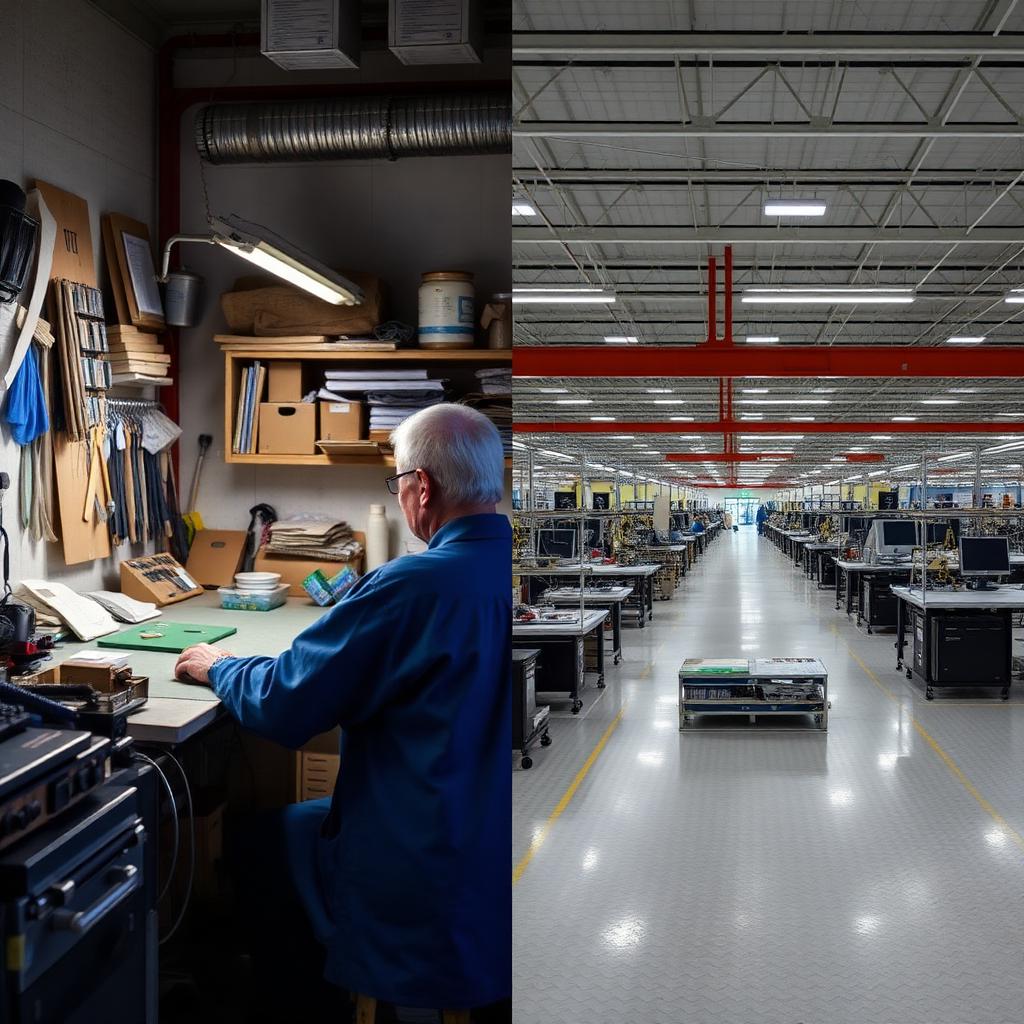
Every brand that sells a physical product eventually hits this fork. You are shipping real volume, your margin is tighter than you want, and you start wondering if you should own the machines instead of renting a factory's. The in house vs outsourced manufacturing question sounds like a cost question. It is really a focus question. Building your own production is a bet that control is worth more than cash and attention. Outsourcing is a bet that you can find a partner good enough that you never need to. Most brands come out on the outsourced side, and the reason is math, not laziness.
The make or buy decision in plain terms
Finance textbooks call this the make or buy decision. Should the thing that defines you be produced by you, or by someone who does it better and cheaper because they do nothing else? If your edge is a patented formula or a process no one can copy, keeping it in house makes sense. But for most D2C brands the product is a great design plus a great audience, and the making of it is not the moat. When the making is not your moat, buying the capacity frees your money and your hours for the parts that are.
Capital, the number that stops most founders cold
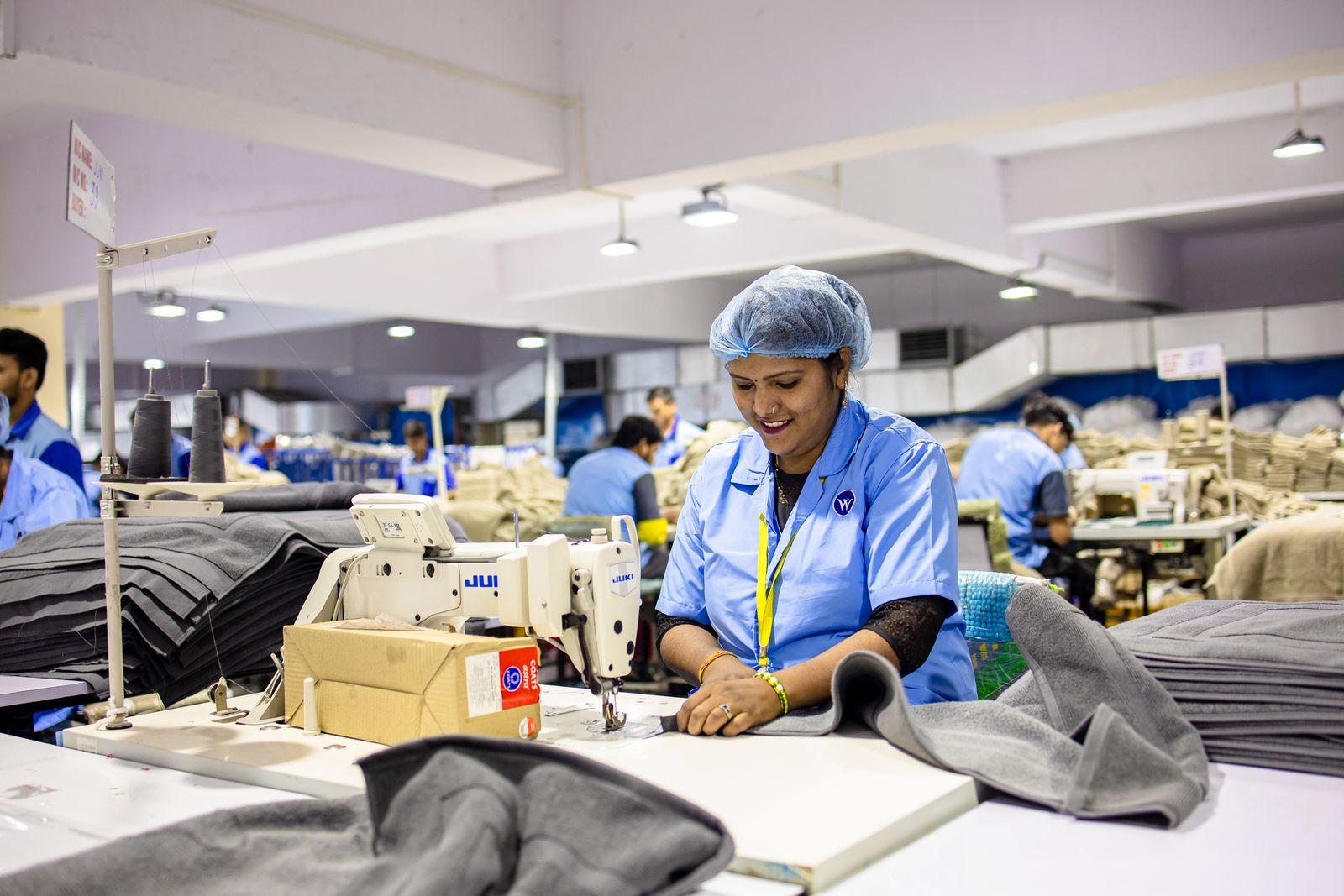
In house means you pay for the building, the machines, the utilities, and the payroll before a single unit ships. NetSuite notes these are large capital expenses that keep costing you through maintenance and energy long after the ribbon is cut. Guides like Upmetrics put the cost of standing up a manufacturing operation anywhere from roughly 550,000 dollars to over 1.3 million, depending on the category. That is capital you are no longer spending on inventory, ads, or your next product. Outsourcing flips it. You skip the infrastructure and pay for units.
Control, the honest case for building
When the line is yours, you set the pace, inspect every unit, and protect your intellectual property, since fewer outside hands means fewer ways your method walks out the door. That certainty is genuinely valuable. Just be clear eyed about the cost, because the same standard is available from a factory that actually holds it. Finding one is a sourcing problem, not a reason to buy machines.
Quality cuts both ways
People assume in house always means better quality. Not true. A specialized factory that makes your category all day often makes it better than a brand learning the craft on borrowed time. The real risk with outsourcing is quality control from a distance, a run that drifts from the approved spec or a defect you catch after it ships. That is why the partner you choose matters more than the model. A vetted factory checking the line closes the gap. A random marketplace supplier does not.
Flexibility and the ability to scale
Demand for a D2C brand is spiky. A video hits, a drop sells out, a slow month follows a huge one. Owned capacity is fixed, so you pay for the line whether it runs full tilt or sits idle. Contract manufacturers keep infrastructure sized for variable loads and flex up or down without you carrying the fixed cost. Every dollar frozen in a warehouse is a dollar not working, a point we get into in how inventory ties up your cash.
Focus, the tradeoff nobody puts on the spreadsheet
This is the one that decides it for most founders. Running a factory is a second company. Hiring, safety, maintenance, procurement, and the daily fires of a production floor. Every hour there is an hour you do not spend on product, brand, and demand, the things that actually grow the business. Outsourcing buys your focus back.
In house vs outsourced manufacturing at a glance
<table> <thead> <tr><th>What you care about</th><th>Building in house</th><th>Outsourcing to the right partner</th></tr> </thead> <tbody> <tr><td>Upfront capital</td><td>High, facility and equipment and staff before you ship</td><td>Low, you pay per unit</td></tr> <tr><td>Control over the process</td><td>Full, you own every step</td><td>Strong when the partner is vetted and checks the line</td></tr> <tr><td>Quality ceiling</td><td>As good as the craft you can build</td><td>Often higher with a category specialist</td></tr> <tr><td>Flexibility to scale</td><td>Fixed capacity, hard to flex fast</td><td>Flexes up and down without fixed cost</td></tr> <tr><td>Where your focus goes</td><td>Split between product and running a factory</td><td>Stays on product, brand, and demand</td></tr> <tr><td>Best fit</td><td>Protected IP and predictable high volume</td><td>Most D2C brands scaling on lean cash</td></tr> </tbody> </table>Who should actually build in house
Some brands should. If your product depends on a proprietary process that is your whole advantage, if your volume is high and predictable enough that fixed costs spread thin, and if you have capital to spare, in house can be right. That is a specific profile. If you hesitated on any of the three, the math points the other way.
Why most D2C brands should outsource to the right partner
For everyone else, outsourcing keeps you lean, and the only catch is the one everyone warns about. You need the right partner, and doing that search alone is where brands lose months. That gamble is the problem No Logo removes. We already have the vetted factory network and an on the ground presence in China. One brand came to us after a full year hunting for the right factory for a pants project. We sourced and produced their next product, a hoodie, in about two weeks. The model stays honest. A transparent 25 percent production margin, no upfront inventory, no MOQ lock in, and you keep your brand and set your own pricing. It pairs with the tactics in how to lower your cost of goods sold, and what to look for in a manufacturing partner is the checklist to run first. If that sounds like the company you want to run, start a project and see a real sample before you commit to anything.