No Logo vs a Sourcing Agent
A fair head to head on No Logo vs a sourcing agent covering what each one does, how they get paid, where the risk lands, and which fits your product.

You have a product you want made and two ways to get it out of your head and into a box. Hire a sourcing agent to go find you a factory, or hand the whole thing to a partner that sources, makes, and ships it for you. This is the honest version of No Logo vs a sourcing agent. What each one does, how each gets paid, where the risk lands, and who each is right for. A good agent earns their fee. The point is to help you pick the one that fits your product and your patience.
A sourcing agent brokers the introduction. A full partner owns the finished product.
What a sourcing agent actually does
A sourcing agent is a person or small team on the ground in China who finds a factory for you and manages it on your behalf. They speak the language, know the factory clusters, and can walk into a plant you would never surface on your own. They pull a shortlist of suppliers, negotiate the price, keep the factory on schedule, and check the goods before they ship. According to Cosmo Sourcing, an agent works as your representative in the supplier market and does not make the product itself. When the run is done, the agent hands you a factory relationship and a pallet of goods, then steps back. You still own the outcome. As we cover in what is a sourcing agent, you are buying help with the search, not offloading the result.
What No Logo does as a full service manufacturing partner
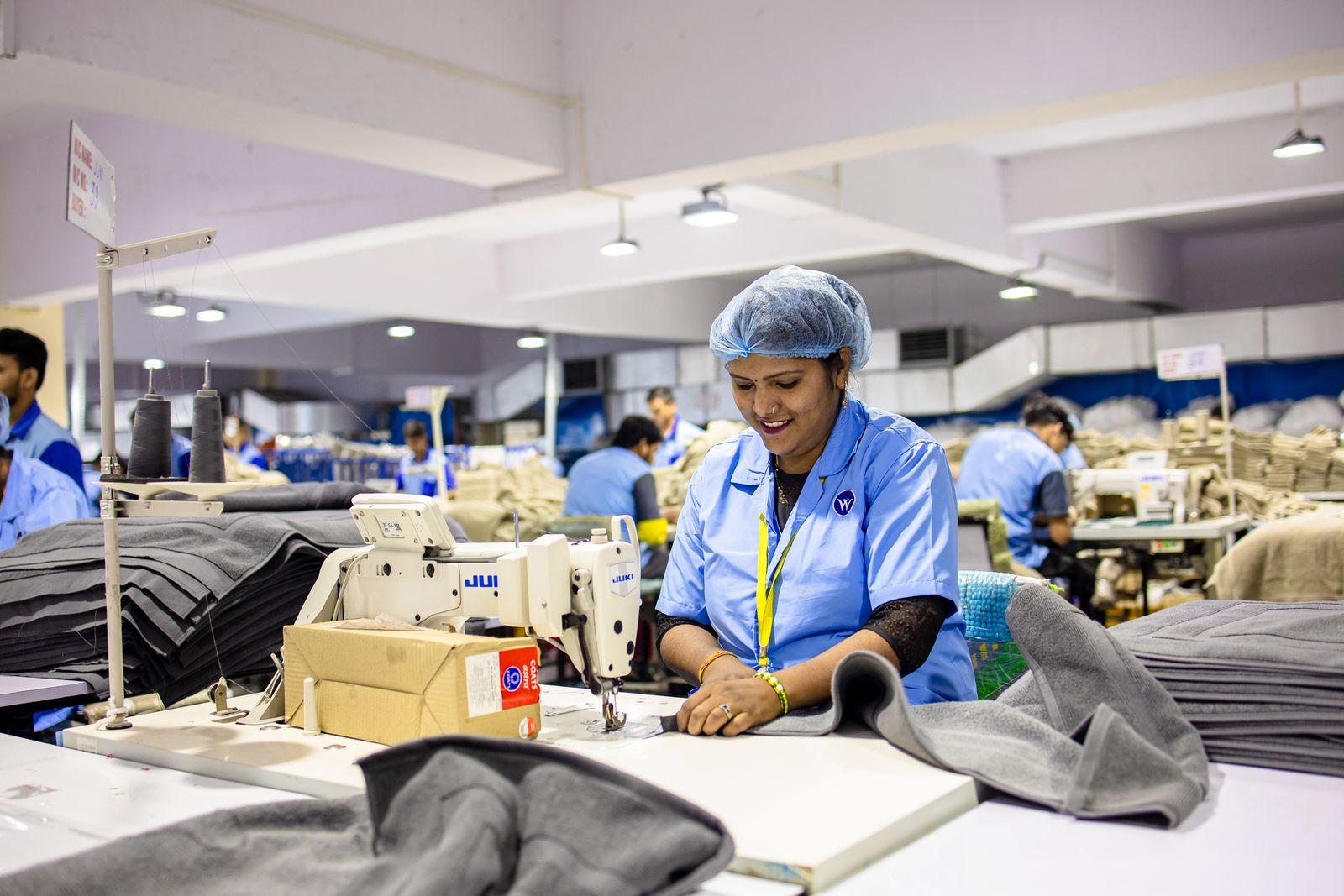
No Logo is not a middle layer between you and a factory. The network is ours, more than 60 vetted factories with production hubs in New York, Shenzhen, and Los Angeles. No Logo takes your product idea or a sample, develops it, produces it inside that network, and delivers finished, quality checked inventory to you under one price. Sourcing, sampling, quality control, production, and freight live in one place. You keep your brand, set your own retail price, and sell through your own store, with no upfront inventory to commit to.
The economics are stated on the invoice, not buried in it. A flat 25 percent added on top of the true cost, with no hidden margins. It works out to 20 cents on every dollar you spend, the same at sampling, production, and freight. If the true cost is 100 dollars, you pay 125 dollars. No commission on top, no second party clipping the order behind your back.
How each one gets paid
Pay quietly decides whose side the work is really on. Most sourcing agents charge a commission, a percentage of your total order value. In 2026 that usually lands between 3 and 10 percent, with the rate dropping as your volume climbs. Maple Sourcing puts small orders near 8 to 10 percent and large or repeat orders near 3 to 5 percent. Some agents work on a flat monthly retainer instead.
Sit with the commission math. An agent paid on a percentage of your order earns more when your order costs more. AQI Service says it plainly. A commission agent has no financial reason to find you a cheaper supplier. No Logo gets paid one way, the flat 25 percent on true cost, the same whether the product is simple or fussy. There is no upside to steering you toward a pricier build.
Sourcing agent versus manufacturer, side by side
<table> <thead> <tr><th>What matters</th><th>A sourcing agent</th><th>No Logo</th></tr> </thead> <tbody> <tr><td>What you get</td><td>A factory found and managed for you</td><td>A finished product sourced, made, and shipped</td></tr> <tr><td>How they get paid</td><td>Commission of 3 to 10 percent or a monthly retainer</td><td>A flat 25 percent on true cost, stated up front</td></tr> <tr><td>Who carries fulfillment</td><td>You do</td><td>You do, No Logo delivers finished inventory to you</td></tr> <tr><td>Upfront inventory</td><td>You order and hold it</td><td>None required</td></tr> <tr><td>Where the risk sits</td><td>With you when goods are wrong</td><td>Shared, the partner owns the outcome</td></tr> <tr><td>Who owns the brand</td><td>You, but you manage everything</td><td>You, and you set the retail price</td></tr> </tbody> </table>Where the risk sits when it goes wrong
An agent finds the factory, but the contract for the goods is usually yours, and so is the loss if the run comes back off spec. The risk gets sharper because of a payment you never see. Some agents collect a kickback from the factory on top of the fee you pay. A supplier quotes 10 dollars a unit, the agent talks it to 8.50, and pockets the 1.50 without telling you. Harris Sliwoski documented one US home goods company that overpaid 2.4 million dollars over three years to a sourcing agent posing as a factory. None of this makes every agent crooked, but the model puts a middle layer between you and the true cost, and the incentives can reward the outcome you least want.
Speed and who each is right for
One brand came to No Logo after a full year trying to find the right factory for a pants project. Because No Logo has people on the ground in China and an established network, that founder's next product, a hoodie, was sourced and produced in about two weeks. We broke down that gap in how long it takes to find a manufacturer. An agent would have handed him another shortlist. The partner handed him a finished product.
A sourcing agent fits when you want to stay in the factory relationship long term, you have the bandwidth to run production and fulfillment yourself, and you can insist on transparent pricing. A full partner fits when what you want is a product you can sell, not a factory you have to manage. If you have already burned months chasing suppliers, or you are a creator with a product idea, the search itself is the thing you want gone. That is the honest case for No Logo as a sourcing agent alternative. When you want to skip the search and see something real, start a project with no obligation.