How to Manufacture Clothing From Tech Pack to Finish
A plain language walkthrough of how to manufacture clothing, from tech pack and fabric to sampling, grading, the production run, and full quality control.
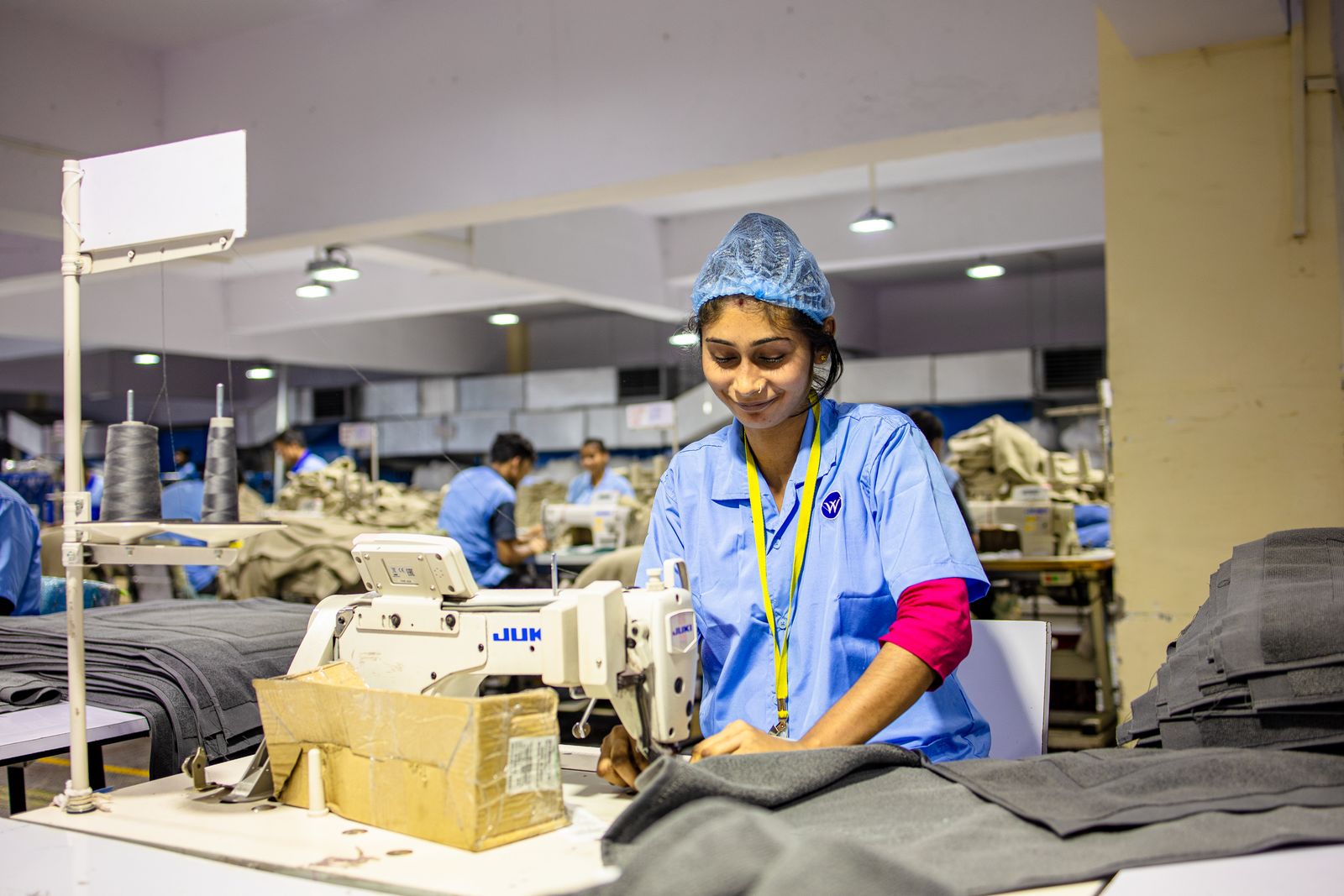
Learning how to manufacture clothing sounds like it should be the hard part. It isn't. A hoodie is a few panels of fabric, some thread, a zipper, and a couple of labels, and factories run that same recipe thousands of times a day. The making is a solved problem. What trips people up is everything around the making. Cut and sew is the term you will hear most. It means a garment built from scratch out of raw fabric, cut into pattern pieces and stitched together, as opposed to a blank tee you buy and print on. Here is how a garment gets from an idea in your head to a box of finished units.
The stages, start to finish
There are six stages that almost never change. Pattern making, then fabric and trim sourcing, then sampling, then grading, then the bulk production run, then quality control. Thygesen, a cut and sew manufacturer, lists the core sequence as pattern making, marker making, cutting, sewing, finishing, and quality control. The names matter less than the order. Each stage depends on the one before it. You cannot grade a pattern you have not approved, and you cannot run production on fabric that has not landed. Skip a step and the cost shows up later, usually in a full run of garments that fit wrong.
What a tech pack is and why nothing starts without one
A tech pack is the single document that tells a factory exactly what to build. Techpacker, a fashion production platform, calls it the blueprint the supplier follows through the entire process. Without one, you are describing your idea over email and hoping a pattern maker halfway around the world guesses right. A real tech pack carries flat technical sketches and any CAD drawings, a bill of materials listing every fabric, trim, label, and bit of packaging, a full set of measurements at specific points of measure with tolerance ranges, construction notes for seam types and stitch methods, and label and packaging specs down to the Pantone color. Get it right and the factory can quote accurately, sample fast, and hold quality across a run of hundreds. Get it vague and you pay for the confusion in extra sample rounds. If you are not a technical designer, this is the piece worth getting help with, covered in design a product when you are not a designer.
Fabric and trims, where your margin is decided
Here is the number that surprises people. Fabric is usually 60 to 70 percent of what a garment costs to make, according to Make Mine, an apparel production firm. That one choice moves your margin more than anything else you do. The hand feel, the weight, the stretch, whether it holds color after ten washes, all of it is decided at the fabric stage. Trims like zippers, buttons, thread, and hangtags still make or break the garment, and a cheap zipper on an otherwise good jacket is the thing a customer notices first. Sourcing means finding suppliers who hit your quality at your quantity, and getting lab dips approved so the color matches before bulk yardage gets made. Make Mine puts the run from brief to bulk approved fabric at 8 to 16 weeks, often the slowest part of the whole project.
Sampling and fit, the part you cannot skip
Sampling is where the tech pack becomes a physical thing you can hold. A proto sample checks whether the silhouette and construction work in three dimensions. A fit sample gets the measurements and drape right on a real body. Then the pre production sample, the one the industry calls the golden sample, has to be 100 percent correct in fabric, construction, color, and trim before anyone cuts bulk. The sampling process generally runs 4 to 8 weeks from tech pack to final approval, and you should expect two or three rounds on a new custom design before it is retail ready. A factory that nails a complex garment on the first sample is the exception. More on this in how to get a product sample made.
Grading and the production run
Once the sample is approved, the pattern gets graded, taking your one approved size and scaling it up and down across the full range so an XS and an XXL both fit the way the sample did. Then production starts. Fabric gets inspected and relaxed, and knits with spandex need to rest flat for at least 24 hours before cutting so they do not shrink after the fact. It gets spread in flat stacked layers, cut against the graded markers, and fed down a sewing line where each station handles one operation, collar attach, sleeve join, hem. Volume is set by minimum order quantity, the floor a factory will accept for one style. Argus Apparel, a clothing manufacturer, puts typical MOQs at 50 to 500 pieces depending on complexity, and suggests first time brands look for factories in the 50 to 150 range. Small runs are possible, they just cost more per unit, which is covered in minimum order quantities explained.
Quality control is a process, not a final glance
Good quality control happens in three passes. Fabric gets inspected before cutting. An inline check hits the sewing floor at roughly 30 to 50 percent complete to catch assembly defects while there is still time to fix them. Then a final random inspection at 80 to 100 percent before anything ships. That final check runs on AQL, the acceptable quality level standard, where inspectors pull a random sample and count defects against an agreed threshold. The common levels in garments are 1.5, 2.5, 4, and 6.5 percent, and most brands doing quality fashion land on AQL 2.5. It is the difference between a return rate you can live with and a review section full of complaints.
The hard part was never the making
Every stage above assumes you already have a factory that will take your call, quote you honestly, sample without ghosting you, and hold AQL 2.5 across a run. That access is the actual bottleneck, and language, time zones, trust, minimums, and quality control from thousands of miles away are what eat a founder's year. One founder spent a full year trying to find the right factory for a pants project, burning through samples and dead ends. He came to No Logo, and because we have people on the ground in China and a vetted factory network already built, we sourced and produced his next product, a hoodie, in about two weeks. The garment was never the problem. The access was.
That is what we actually sell. Not sewing, which any factory can do, but the years of relationships and vetting a founder cannot build alone, at a flat 25 percent production margin with no upfront inventory, and you keep control of your brand and your pricing. If you are earlier in the process, how to find a clothing manufacturer covers the search itself. When you want to see whether your product is a fit, get in touch with the team with no obligation.