How to Design a Product When You Are Not a Designer
How to design a product to manufacture when you are not a designer, turning a sketch, an image, or a plain description into a real manufacturable spec and product.
Most people who want to make a physical product stop at the same wall. They have the idea, they can picture the thing on a shelf, and then one word kills it. Designer. As in, I am not one, so I cannot do this. That belief is wrong. Learning how to design a product to manufacture starts with letting it go. You do not need to render anything in software. You need a clear idea and someone who can translate it. The gap between what you can imagine and what a factory can build is a translation problem, not a talent problem.
An idea is not a spec, and that is fine
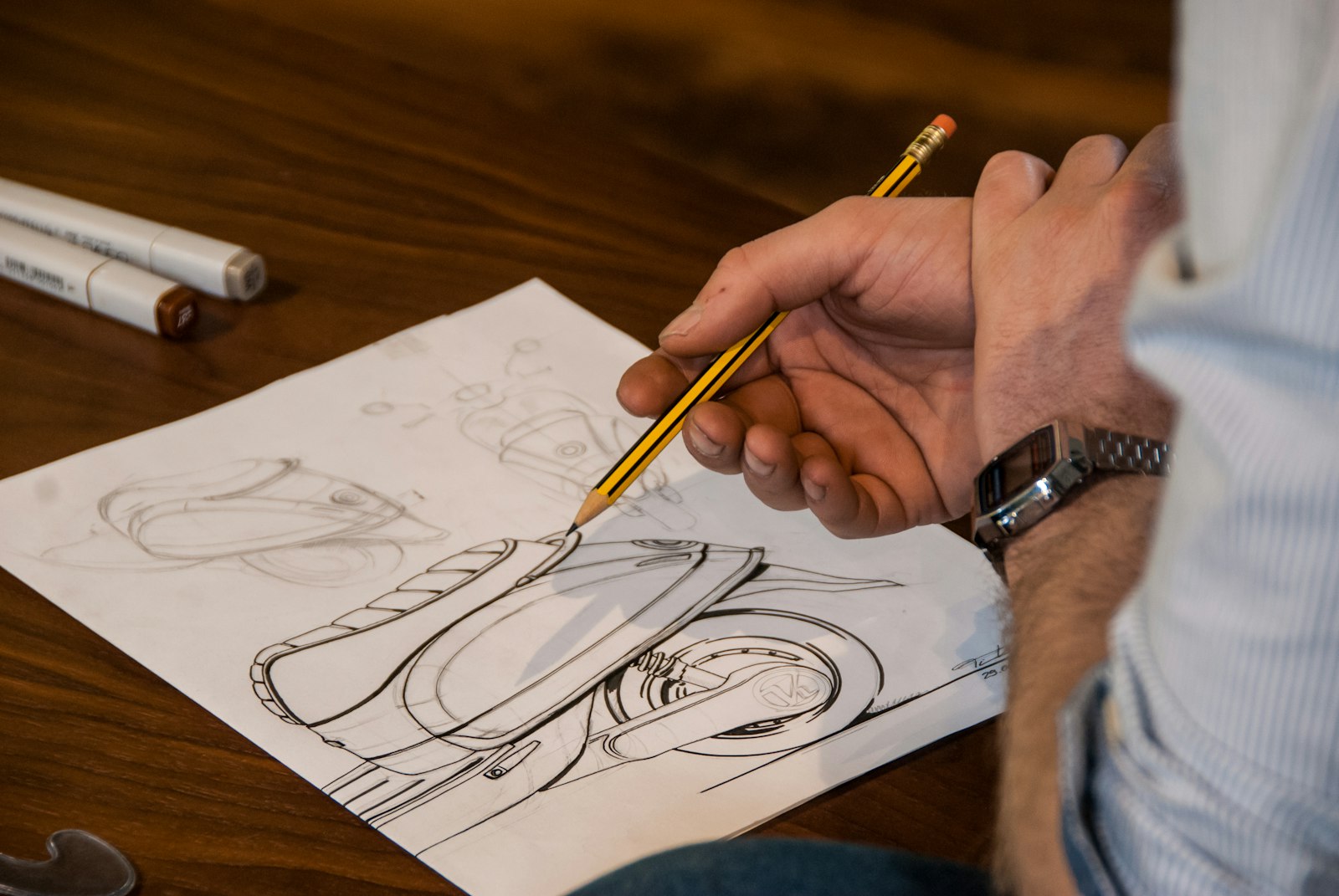
An idea is the thing in your head. A three foot tall lamp shaped like a stack of river rocks. A tote made from recycled sailcloth. A spec is the document a factory reads to build it. A sketch is a rough visual, a suggestion, useful for talking and useless for cutting material. The version a factory needs is a tech pack, the full manufacturing blueprint, with materials, exact measurements and tolerances, color codes, construction methods, packaging, and a bill of materials listing every fabric, trim, and label. That sounds like a second job because it is. It is just not your job. You supply the idea and the taste, and the partner supplies the tech pack.
How to communicate what you want
You have more tools for this than you think, and none require software. Pull reference images of things that already exist and get close to what you mean. This shape, that finish, this weight. A board of five real objects tells a manufacturer more than a paragraph ever will. Give rough dimensions. You do not need engineering drawings, you need to say it should be about knee height, or fit in a jacket pocket. Numbers with the word about in front of them are still numbers. Describe feel and use. How someone holds it, where it lives, what it should not do. That is the part only you know, because you invented the reason the thing exists. A plain paragraph plus two reference photos and a rough height is enough for a good development team to start. From sketch to product does not require the sketch to be good, or even to exist.
What the manufacturer fills in
Everything you cannot answer is exactly what a manufacturing partner answers for you. Materials are the clearest example. A partner who has built things before knows the acrylic you love scratches, that a certain wood warps in humidity, that the finish you pointed at adds two weeks and a cost you did not budget for. Bringing them in early is the whole move. They also convert your fuzzy inputs into hard ones. Your about knee height becomes a measured dimension with a tolerance. Your reference photo becomes a color and finish spec. Your paragraph becomes construction notes the factory can actually build. That translation, idea to blueprint, is the craft you are hiring.
This is the honest case for building with a partner instead of hunting for a factory alone. No Logo already has a vetted factory network and people on the ground in China, so the tech pack, the material calls, and the tolerances are handled by a team that has done it hundreds of times rather than learning on your product. You keep the idea, the taste, and the brand, with no upfront inventory to commit to while you figure it out. For the full arc from first message to finished box, we walk through it in how to launch a product brand as a creator.
Why the first sample is rarely the last
Nobody nails it on the first try. Design is iterative, which is a formal way of saying you make one, hold it, find what is wrong, and make it again. A sample gets produced and shipped to you. You hold the real object, not a photo, and react. Too tall. Handle is sharp. Color reads warmer than the reference. That feedback goes into a revised sample, and you repeat until two consecutive samples turn up no new major problems. Could be two rounds, could be four. You can approve a rendering and still be surprised by the weight or the way light hits the finish. A screen cannot fake heft. For how these rounds fit a schedule, the timeline is in idea to product in 6 to 8 weeks.
Oskar started with objects, not drawings
The clearest proof that you do not need to be a designer is a guy who was not one. Oskar Flodstrom built furniture in a 120 square foot room with no design degree and no software. He bent a sheet of acrylic he found on the side of the road into a pill bottle shaped piece and filmed it, and that video did 500,000 views when he had 4,000 followers. When he turned it into his brand erik oskr, he did not hand over a tech pack. He handed over the object he had already built by hand. The factory network took that physical thing, worked out the materials and the spec, produced a sample, and sent it back. He launched the Pill Bottle Side Table and the store did 50,000 dollars on day one.
You were never missing the design skill. You were missing the translator. If you have the idea and want a team to handle the translation into a real, manufacturable product, start a project with No Logo. Bring whatever you have, even if it is just a description and two photos.