How to Sell Your Own Products to Your TikTok Audience
TikTok is built to make products blow up, yet most creators only rent that reach to brands. Here is how to sell your own product to your TikTok audience instead.
A guy films himself bending a sheet of acrylic he found on the side of the road. The video does half a million views. Comments fill with one question, over and over. Where do I buy that. This is the exact moment where most creators freeze, and it is the exact moment this guide is about. If you want to know how to sell products to your TikTok audience, start by understanding that the platform already did the hard part for you. It found the buyers. What is missing is a thing to sell them that you actually own.
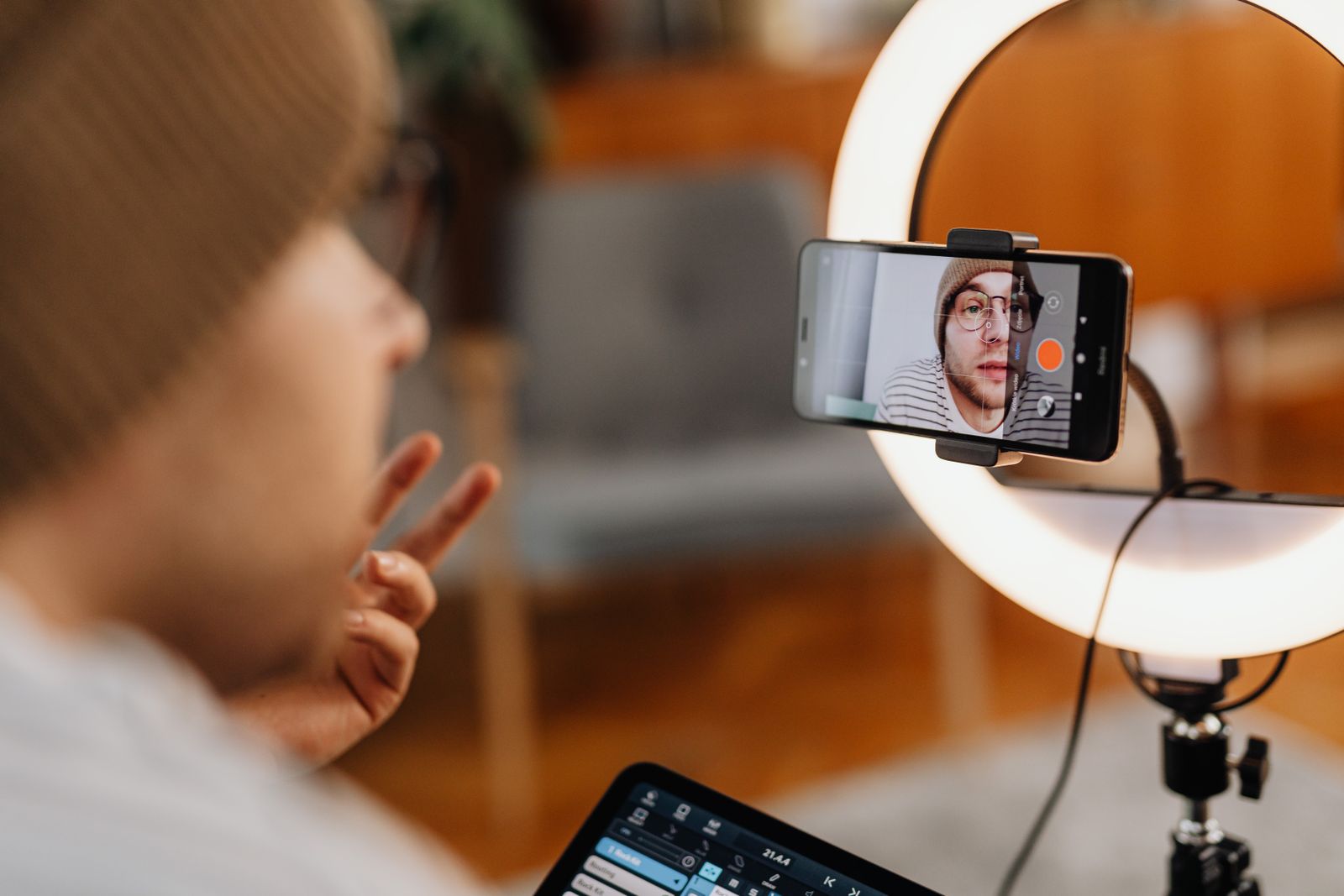
A creator filming the kind of process video that turns attention into demand
TikTok is a discovery engine wearing the costume of a social app. It does not care how many followers you have. A first video can outrun an account with a million subscribers because the feed rewards the clip, not the résumé. That is why products go from unknown to sold out in a weekend on TikTok and almost nowhere else. The trouble is what most creators do with that power. They rent it.
The TikTok reach advantage most creators give away
The numbers are not small. TikTok Shop's US gross merchandise value grew 68 percent to reach 15.1 billion dollars in 2025, up from 9 billion the year before, according to a Momentum Works report released with Tabcut. Globally the figure hit 64.3 billion dollars, up 94 percent. Video remained the single largest channel, driving half of all US sales. People are not just scrolling on TikTok. They are buying, straight out of the feed, from creators who showed them something and made them want it.
Here is the part worth sitting with. Most of that demand runs through brand deals and affiliate links. A creator makes a product go viral, tags someone else's shop, and collects a commission that usually lands somewhere around 5 to 8 percent. The brand keeps the customer, the margin, and the asset. The creator keeps a screenshot of the analytics. You did the marketing that a company would pay a full team to attempt, and you handed the upside to the company.
That trade made sense when making your own product meant factories, minimums, and a warehouse. It does not make sense anymore.
Why your own product beats affiliate links and reselling
There are three ways to turn TikTok attention into money. You can promote someone else's product for a commission. You can resell generic inventory through dropshipping or a print on demand blank. Or you can sell a product that is yours. Only one of those builds something you can keep.
Affiliate income has a hard ceiling because you never touch the margin. You can send a brand 100,000 dollars in sales and see a few thousand of it. We wrote about that ceiling in more detail in affiliate income versus owning your brand, and the short version is that a percentage of someone else's product is not a business, it is a tip.
Reselling generic goods has a different problem. The product is not distinct, so nothing about it connects back to you. A hundred other accounts can list the same item tomorrow. Your audience bought a thing, not your thing, and the moment the trend cools you have no brand left standing. You do not really own your audience until you own the product. Rented influence disappears the second the sponsor moves on.
Your own product flips all of it. You set the price. You keep the margin, which for creators making their own goods often lands somewhere between 30 and 50 percent instead of single digits. Every sale strengthens a brand with your name on it, not a merchant's. And the audience that already trusts you gets to buy something that only exists because you made it. That trust is the asset TikTok hands you. A product is how you cash it in.
The content that actually sells a physical product
Selling your own thing on TikTok does not mean turning your account into a commercial. It means the opposite. The content that moves product is the content you were probably already making.
Process videos win because they are honest. Showing a table get built, sanded, and finished is more convincing than any ad, because the viewer watches value appear in real time. Oskar Flodstrom did not run a campaign. He posted a video of a mirror he built, then went back and filmed the process behind his other pieces, including a three foot tall pill bottle shaped hamper made from that roadside acrylic. The hamper video did 500,000 views while he had 4,000 followers. The work was the marketing.
A few things tend to separate content that sells from content that just entertains. Show the object doing its job in a real space, not on a white background. Answer the comment everyone is about to leave, which is almost always some version of can I buy this. And film with the assumption that a brand new viewer, not your regulars, is watching, because on TikTok that is usually true. Keep the personality. The reason your audience will buy from you and not the identical item elsewhere is that it comes from you.
You do not need a studio. Oskar's workshop is a 120 square foot room under a freeway overpass. The camera does not know the difference, and neither do the buyers.
Capturing viral demand before it fades
Here is where the plan usually falls apart. A video pops, the comments beg for a link, and the creator has nothing to send them. By the time a product exists, the moment is gone and the audience has scrolled to the next thing.
Demand on TikTok is loud and short. A spike can bring you months of attention compressed into 72 hours, and it will not wait while you figure out manufacturing. The creators who win are the ones who can point that spike at something real fast, or who saw it coming and got a product ready in advance. We broke down the mechanics of this in turning a viral moment into sales, and the core lesson is that speed is the whole game. Attention that is not captured is just a nice memory.
This is the hard part, and it is the part worth being honest about. Most creators are not manufacturers. Sourcing a factory, ordering samples, sorting out materials and packaging and shipping while a video is still climbing is not a thing one person pulls off in a week. This is exactly where the moment gets wasted. If a video of yours is taking off right now, you can submit the idea or a sample at form.nologo.com with no obligation and get a real product moving before the attention cools.
How to actually make and ship the thing
Owning a product used to mean owning all of its problems. Finding a factory that will take your order, guessing at materials, fronting cash for inventory, then handling every shipment and every customer email yourself. That work is real, and it is why so many creators stop at affiliate links. The gap between a viral video and a finished product on a doorstep is where most ideas die.
That gap is closing. The model that fits a creator is simple. You bring the idea and the audience. A partner handles the manufacturing, the fulfillment, and the customer support, and you keep the brand and set the price. No warehouse in your name. No 10,000 unit minimum order. No upfront inventory bet on a product you have not proven.
That is what NO LOGO does, and it is worth being plain about why it fits this exact situation. A creator with a viral video does not have a year to find a factory. NO LOGO already has the vetted factory network and an on the ground presence in China, so the sourcing that would take a founder months is already done. The economics are transparent, a flat 20 percent production margin with no hidden fees, and you set the retail price on top. When Oskar submitted his hamper as a sample, NO LOGO manufactured it inside that network and delivered a finished piece back to him with no capital, no minimums, and no risk on his side. He launched the Pill Bottle Side Table, and the store did 50,000 dollars in revenue on its first day. You can read Oskar's full story for how the whole thing unfolded.
Making it is only half of it. Once orders come in you have to fulfill them, and a spike that outruns your ability to ship is its own kind of failure. Being ready to meet that surge is a real skill, and we covered it in how to scale production after going viral. A launch that sells out and then goes silent for two months teaches your new customers to forget you.
Own the thing your audience already wants
TikTok will keep handing reach to whoever makes the best clip. That part is not going to change. What can change is who benefits when your video takes off. Right now, for most creators, it is a brand you tagged. It does not have to be.
You have the audience and the ideas. That is the part nobody can manufacture for you. The rest, the factory, the samples, the shipping, the support, is solvable, and quickly. If you have a product in mind or a video already climbing, you can drop the idea or a sample at form.nologo.com with no commitment and see a real sample come back. If you would rather talk it through first, get in touch with the team. Either way, the goal is the same. Stop renting your reach to other people's products, and start selling your own.