Domestic vs Overseas Manufacturing for D2C Brands
A working comparison of domestic vs overseas manufacturing on cost, minimums, lead time, quality, and 2026 tariffs so you can decide where to make each product.

You already sell something. The product works, the orders are real, and now you are staring at the decision that actually moves your margin. Where do you make it. The domestic vs overseas manufacturing question gets argued like a values debate, but for an operator it is a spreadsheet problem with a story attached. Here is the honest head to head, one factor at a time, so you can pick the right home for each product instead of the one that sounds good.
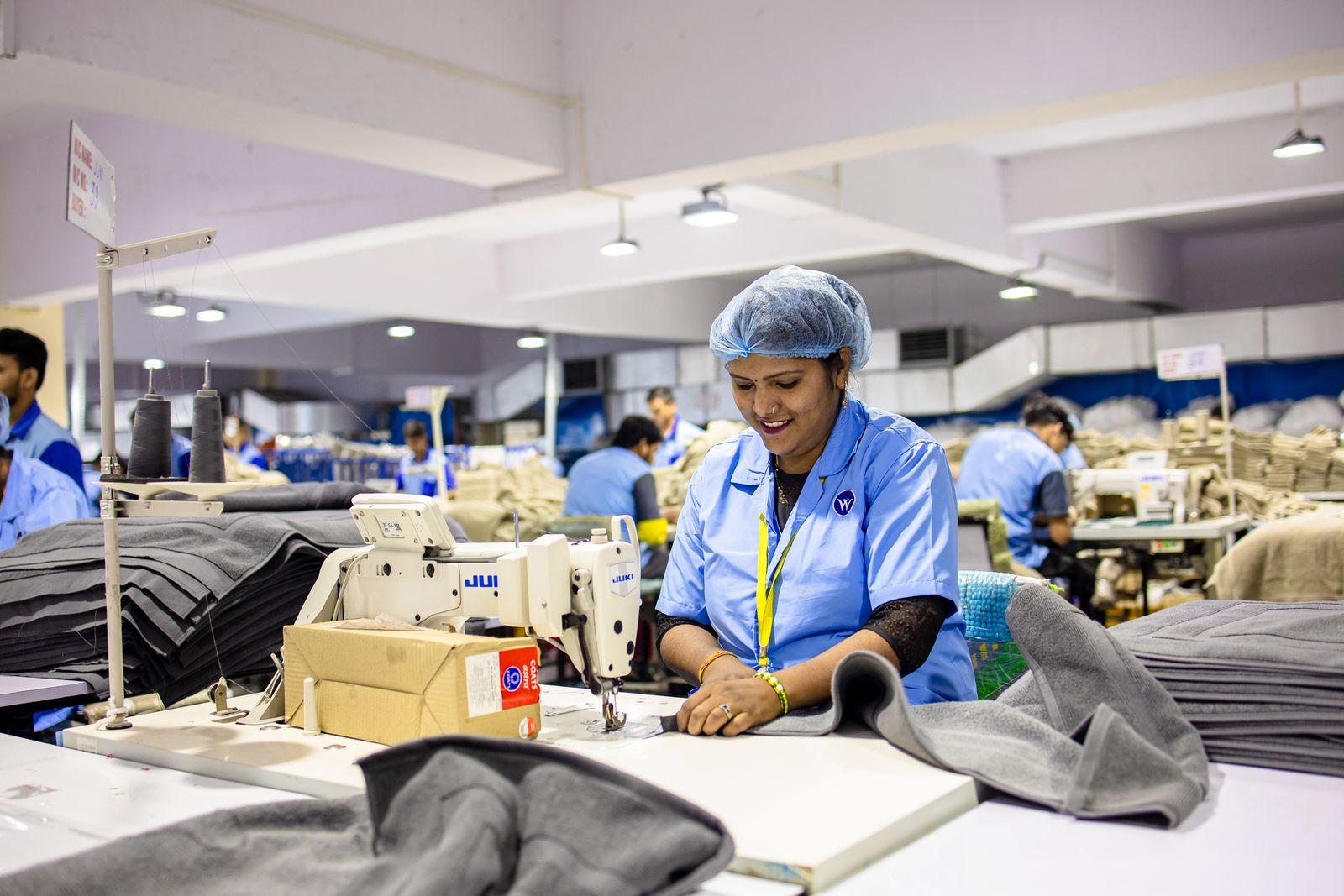
A production floor where unit cost, minimums, and lead time get decided long before your first order ships
The cost gap
Start with the number that pays your salary. On a per unit basis, overseas production is still cheaper for most physical goods, and it is not close for anything labor heavy. The manufacturing consultancy Klugonyx pegs Chinese factory labor at roughly 4 to 8 dollars an hour against 25 to 40 dollars or more in the United States, which alone can add a third to your assembly cost. Cut and sew apparel, plush, molded plastics, small electronics, anything with a lot of human touch lands well below domestic pricing before you factor freight.
Domestic closes some of that gap on specific things. Heavy or bulky items where ocean freight eats the savings. Products that lean on automation instead of hands. Short runs where an overseas order forces you to buy more than you can sell. But if your product is labor heavy and you want the lowest landed cost, overseas is the default answer.
Minimums and the cash they lock up
Cost per unit is only half the money question. The other half is how much stock you are forced to buy at once. Overseas factories protect their setup time with higher minimum order quantities, so your first purchase order can run into the thousands of units. Domestic and near shore shops tend to take smaller runs, which is why a lot of brands test new SKUs at home before committing volume abroad. A high minimum is inventory sitting in a warehouse instead of money in your account, so if you are early on a product and unsure it will sell, a smaller domestic run can be cheaper in total even at a worse unit price. We break the mechanics down in minimum order quantities explained.
Lead time and speed to shelf
Speed is where local production earns its keep. A domestic run can be in your hands in a couple of weeks. An overseas order carries the making time plus the ocean, and transit from China to the United States runs roughly 30 to 56 days depending on the coast, before anything clears customs. Add design rounds and you can lose a full quarter.
So the pattern writes itself. If you sell into trends, restock viral SKUs on short notice, or run tight drops, the weeks you save domestically can matter more than the dollars you save overseas. If your demand is steady and forecastable, the longer overseas pipeline is a scheduling problem, not a real cost.
Quality is a process, not a country
The lazy version of this debate treats domestic as high quality and overseas as cheap. That is not how it works. China builds the most advanced electronics on earth and also builds junk, and the same is true of any US shop. Quality tracks the factory, the tech pack, and the inspection process, not the flag on the building. What protects you is a clear spec, samples you approve before the run, and someone checking the line. Distance makes that harder to manage from your desk, which is the honest strike against overseas, not the workmanship.
The 2026 tariff picture
Tariffs are the reason this question got loud again, and the situation is genuinely in flux, so treat any single number as a snapshot. On February 20, 2026, the Supreme Court struck down the tariffs imposed under the International Emergency Economic Powers Act in a 6 to 3 decision, and per Congressional Research Service reporting those duties ended on February 24. That removed the broad emergency surcharge. It did not remove everything.
The Section 301 tariffs on China sit outside that ruling and remain in force. Most affected goods carry 25 percent, while List 4A categories like apparel, footwear, and many consumer electronics sit at 7.5 percent, according to White and Case and published Section 301 guides. The administration also moved to replace the struck down duties with a Section 122 surcharge, announced at 10 percent and raised toward 15 percent. The takeaway is not a fixed rate. Overseas goods still carry duty, the rules can shift again, and you need to price with the current stack. Verify the current duty on your specific product classification with a customs broker before you set your price, and see the legal ways to soften it in how to reduce tariff and duty costs.
Tariffs push a lot of brands toward spreading production across more than one country rather than pulling all of it home, an approach we walk through in China plus one sourcing explained. Moving everything domestic is a bigger decision we treat in reshoring vs overseas manufacturing.
The made in country story
A made in the USA label does carry marketing weight. A 2007 Gallup poll found 94 percent of Americans say they would buy US made food over a cheaper Chinese version even at twice the price, 82 percent said it for toys, and 76 percent for furniture, though willingness drops into the 60 to 70 percent range for appliances, shoes, home goods, and clothing.
Now the cold water. What people say and what they buy are different things. The brand Afina listed an identical shower head at 129 dollars made in Asia and 239 dollars made in the USA, and as Forbes reported, more than 25,000 visitors later the number who bought the American version was zero. A domestic story is a genuine asset for the right product and the right buyer. It is not a license to charge whatever you want.
A short comparison
| Factor | Domestic | Overseas |
|---|---|---|
| Unit cost | Higher, especially on labor | Lower for most categories |
| Minimum order | Smaller runs available | Often high, more cash upfront |
| Lead time | About 2 weeks typical | Making time plus 30 to 56 days transit |
| Quality | Depends on the shop | Depends on the factory and QC |
| Tariffs | None on the goods | Duty applies, rules shifting in 2026 |
| Story | Made in country sells for some buyers | Harder to market on origin |
Choose per product, with a partner who has both
Read the factors back and the answer stops being one country. It is a sorting job. Labor heavy, price sensitive, forecastable demand leans overseas. Small runs, fast restocks, and a product where the origin story actually converts lean domestic. Most catalogs want a mix, and the smart move is choosing per SKU instead of marrying one map.
That is the wall most founders hit alone. You can find a domestic shop or an overseas factory, but building trusted access to both, with vetting and quality control on each, is years of work you do not have time for. This is the No Logo wedge. We have an on the ground presence in China and a vetted factory network, so you can source the right product in the right place without running two separate searches. One brand spent a full year hunting for the right factory for a pants project. Their next product, a hoodie, went from idea to made in about two weeks through our network. The model stays transparent, a flat 25 percent production margin with no upfront inventory lock in, and you keep your brand and set your own pricing.
If you are weighing where to make your next product, start a project and see a real one made with no obligation.